Confused About Montessori Schooling? Here’s What Every Parent Wants to Know
Choosing the right school for your child can feel overwhelming—especially when you keep hearing about Montessori education but aren’t quite sure what it truly involves. Many parents searching for the best montessori school in Kothanur often find themselves torn between traditional schooling and Montessori’s child-centred approach. Questions around learning outcomes, discipline, academics, and future transition are completely natural.
If you’re feeling curious, confused, or even slightly sceptical, you’re not alone. This blog answers the most common questions parents ask about Montessori schooling—clearing myths, sharing facts, and helping you decide what’s genuinely right for your child.
What exactly is Montessori schooling?
Montessori schooling is an education method developed by Dr. Maria Montessori, an Italian doctor and educator. At its core, Montessori is based on one powerful idea: children learn best when they are respected as individuals and allowed to learn at their own pace.
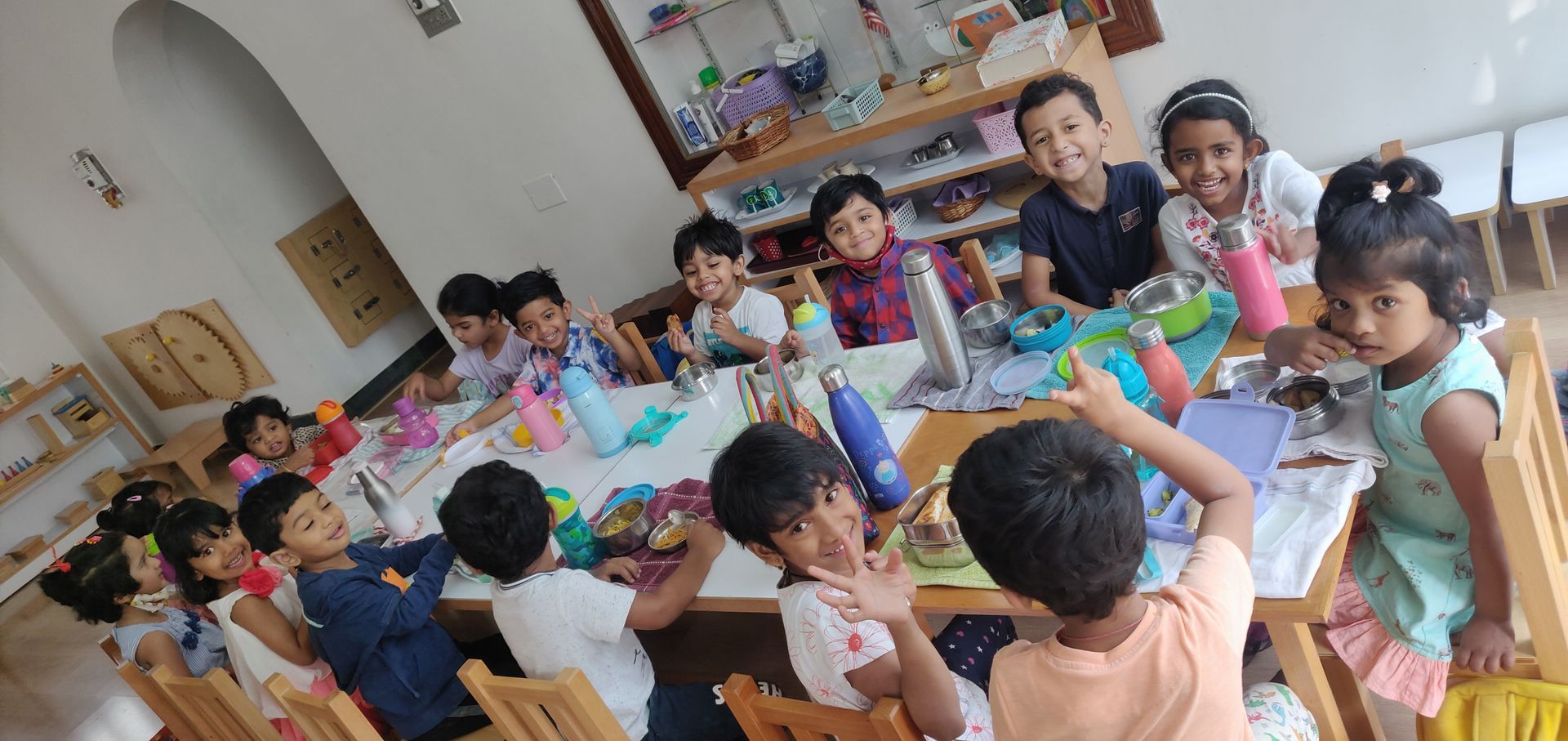
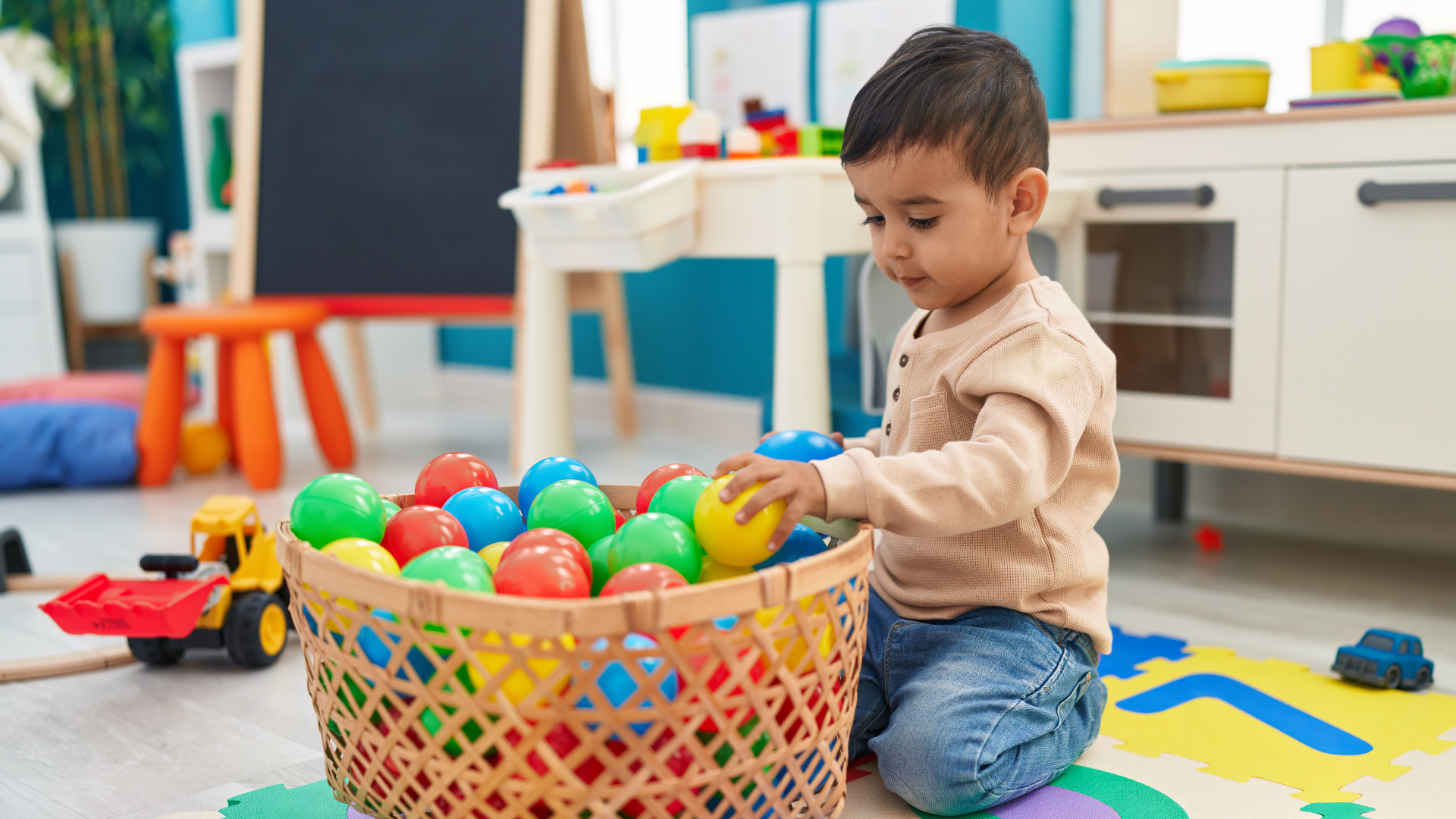
Unlike traditional classrooms where all children are taught the same lesson at the same time, Montessori classrooms are child-centred. Children choose activities based on their interest, work hands-on with specially designed materials, and learn through experience rather than rote memorisation.
Key features of Montessori schooling include:
- Mixed-age classrooms (usually 3–6 years)
- Hands-on learning materials
- Freedom within structure
- Trained Montessori guides instead of conventional “teachers”
- Focus on independence, concentration, and self-discipline
In simple terms, Montessori doesn’t force learning—it invites learning.
Is Montessori better than regular school?
This is probably the most common question parents ask—and the honest answer is: it depends on the child.
Montessori is not “better” in a competitive sense, but it is different in philosophy.
Traditional schools often focus on:
- Fixed curriculum timelines
- Exams, grades, and comparisons
- Teacher-led instruction
Montessori focuses on:
- Individual readiness
- Mastery over speed
- Intrinsic motivation rather than rewards or fear
Children in Montessori environments often develop:
- Strong concentration
- Love for learning
- Confidence and independence
- Problem-solving skills
However, Montessori may not suit parents who expect early worksheets, homework pressure, or visible academic “output” in the first year itself. Montessori works quietly—but deeply.
Do Montessori schools follow a syllabus?
Yes—but not in the traditional textbook sense.
Montessori schools follow a structured curriculum covering:
- Language (pre-reading, phonics, writing)
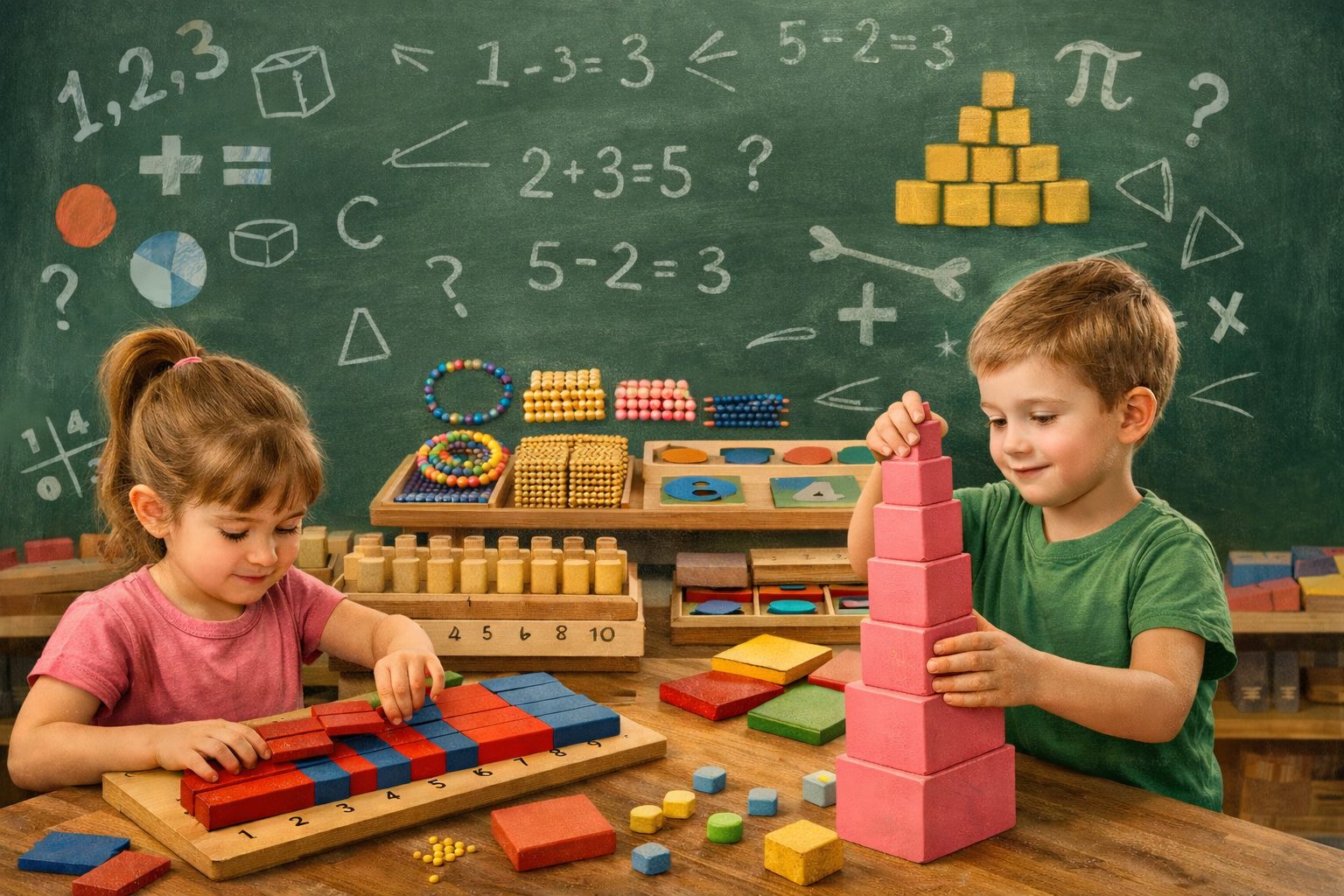
- Mathematics (numbers, quantities, operations)
- Sensorial development
- Practical life skills
- Cultural studies (science, geography, history)
The difference is how the syllabus is delivered.
Instead of:
“You must finish this chapter by this month”
Montessori works like:
“When the child is ready, the material is introduced”
Every concept is broken down into clear, logical steps using concrete materials. Children move from hands-on learning → understanding → abstract thinking.
So yes, there is a syllabus—but it respects the child’s developmental timeline.
What age is best to start Montessori?
Montessori education can begin as early as 2.5 or 3 years, and this age is actually considered ideal.
Why?
Because the early years (0–6) are known as the “absorbent mind” phase, when children naturally absorb language, behaviour, and skills effortlessly.
Starting Montessori between 2.5–4 years helps children:
- Develop independence early
- Build social and emotional skills
- Improve focus and coordination
- Learn routines without pressure
That said, children can still benefit if they start later—but the earlier years give the strongest foundation.
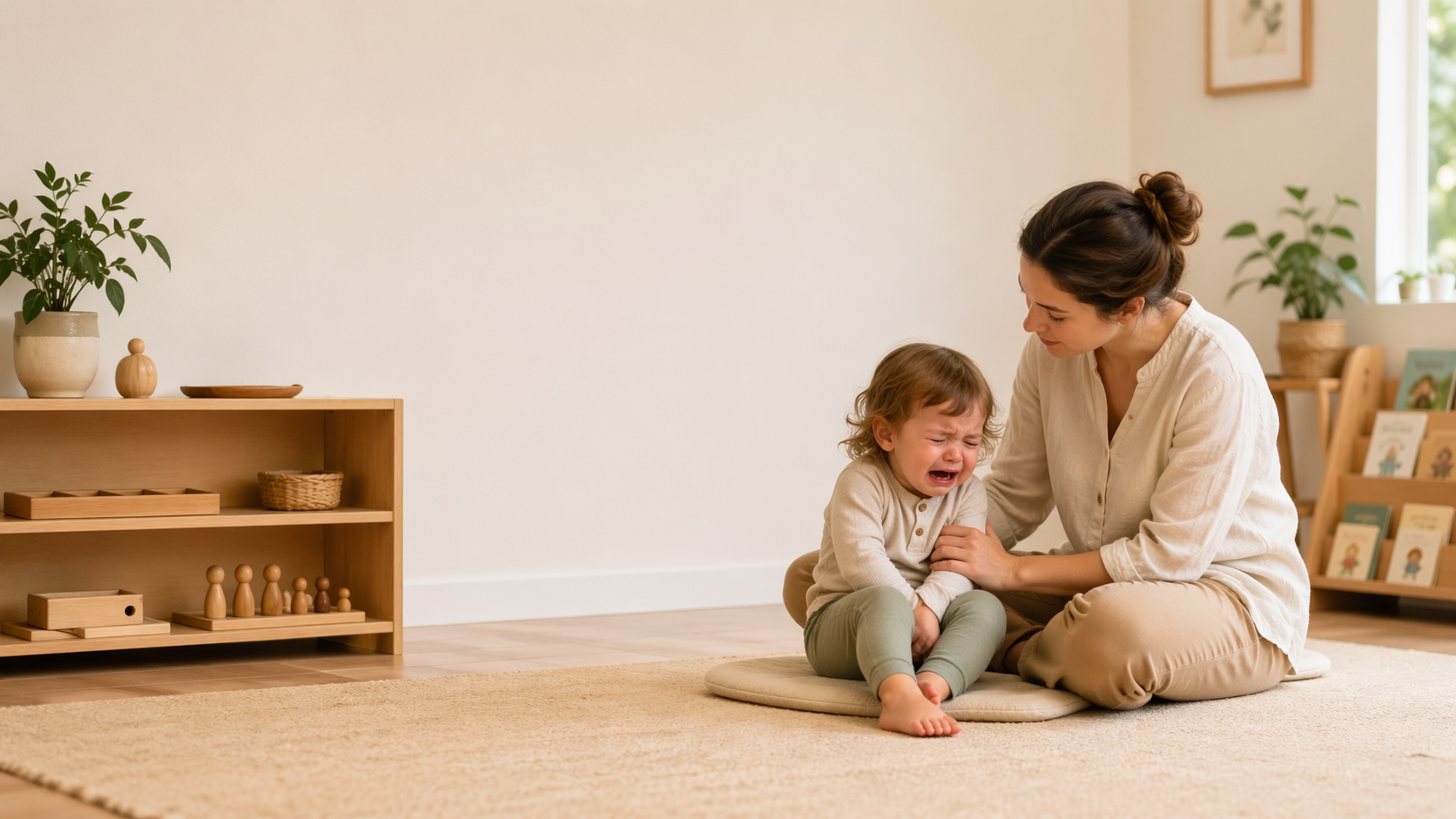
Is Montessori good for shy kids?
Absolutely—often especially good for shy children.
Montessori classrooms are:
- Calm and non-competitive
- Free from constant comparison
- Respectful of individual personality types
Shy children are not forced to speak up, perform, or compete. They are gently encouraged to engage at their own pace. O
Over time, many shy children:
- Gain confidence naturally
- Start communicating comfortably
- Feel safe and respected
Because Montessori focuses on inner confidence rather than external validation, shy kids often thrive beautifully.
Is Montessori good for ADHD kids?
Many parents of children with ADHD find Montessori to be a supportive and understanding environment.
Why Montessori works well for ADHD children:
- Movement is allowed (children are not expected to sit still for long periods)
- Hands-on materials engage attention
- Learning is broken into manageable steps
- No pressure of constant testing
- Freedom to choose activities helps channel energy productively
That said, the quality of the Montessori environment and the training of the guide matter a lot. A well-run Montessori classroom can help ADHD children build focus, self-regulation, and confidence.
Is Montessori just play or do kids actually learn?
This is one of the biggest misconceptions.
Yes, Montessori looks like play—but it is purposeful play with deep learning.
Every material in a Montessori classroom is designed with a clear learning objective:
- Pouring water develops fine motor skills and concentration
- Bead chains teach mathematical concepts
- Sandpaper letters build reading and writing skills
- Practical life activities teach sequencing, patience, and responsibility
Children are not “just playing”—they are:
- Developing neural connections
- Learning through experience
- Building strong cognitive foundations
The learning is real—it just doesn’t look stressful.
Can Montessori kids read and write properly?
Yes, and many Montessori children learn to read and write with strong comprehension, not just memorisation.
Montessori introduces literacy through:
- Phonetic awareness
- Sensory materials
- Gradual progression from sounds → words → sentences
Instead of forcing writing early, Montessori strengthens:
- Finger strength
- Pencil control
- Language clarity
As a result, when Montessori children start reading and writing, they often do so confidently and joyfully—not because they were pushed, but because they were ready.
Do Montessori kids struggle later in normal schools?
This is a very valid concern—and the answer is: most Montessori children adapt well, especially when the transition is done thoughtfully.
Montessori children often enter regular schools with:
- Strong independence
- Good focus
- Love for learning
- Emotional maturity
Some children may need time to adjust to:
- Fixed seating
- Exams and homework
- Less freedom of choice
However, studies and real-world experience show that Montessori children usually catch up quickly—and often excel—because their foundation is strong.
The key is choosing:
- A good Montessori school
- A supportive transition environment later
Final Thoughts: is Montessori schooling the right choice for your child?
Montessori schooling isn’t a trend or a shortcut—it’s a child-respecting educational philosophy that has stood strong for over a century. The real question isn’t whether Montessori is “better” than regular schooling, but whether it aligns with your child’s needs, personality, and learning style.
If your child thrives in a calm environment, enjoys hands-on learning, needs time to explore concepts deeply, or benefits from gentle guidance rather than pressure, Montessori can be a powerful foundation. It nurtures not just academics, but also independence, confidence, emotional balance, and a lifelong love for learning.
That said, Montessori may not suit families who expect early academic results through worksheets, strict schedules, or constant testing. Montessori works subtly—building skills quietly and steadily, often showing results that last far beyond the early years.
The best way to decide is simple:
- Visit a Montessori school
- Observe a classroom in action
- Talk to the guides
- Most importantly, notice how your child responds
Because in the end, the right school isn’t the one with the most hype—it’s the one where your child feels safe, understood, curious, and happy to learn.