
What Are the Signs That My Toddler Is Ready to Start Preschool?
Aishwarya Eshwar • February 26, 2026
The body content of your post goes here. To edit this text, click on it and delete this default text and start typing your own or paste your own from a different source.
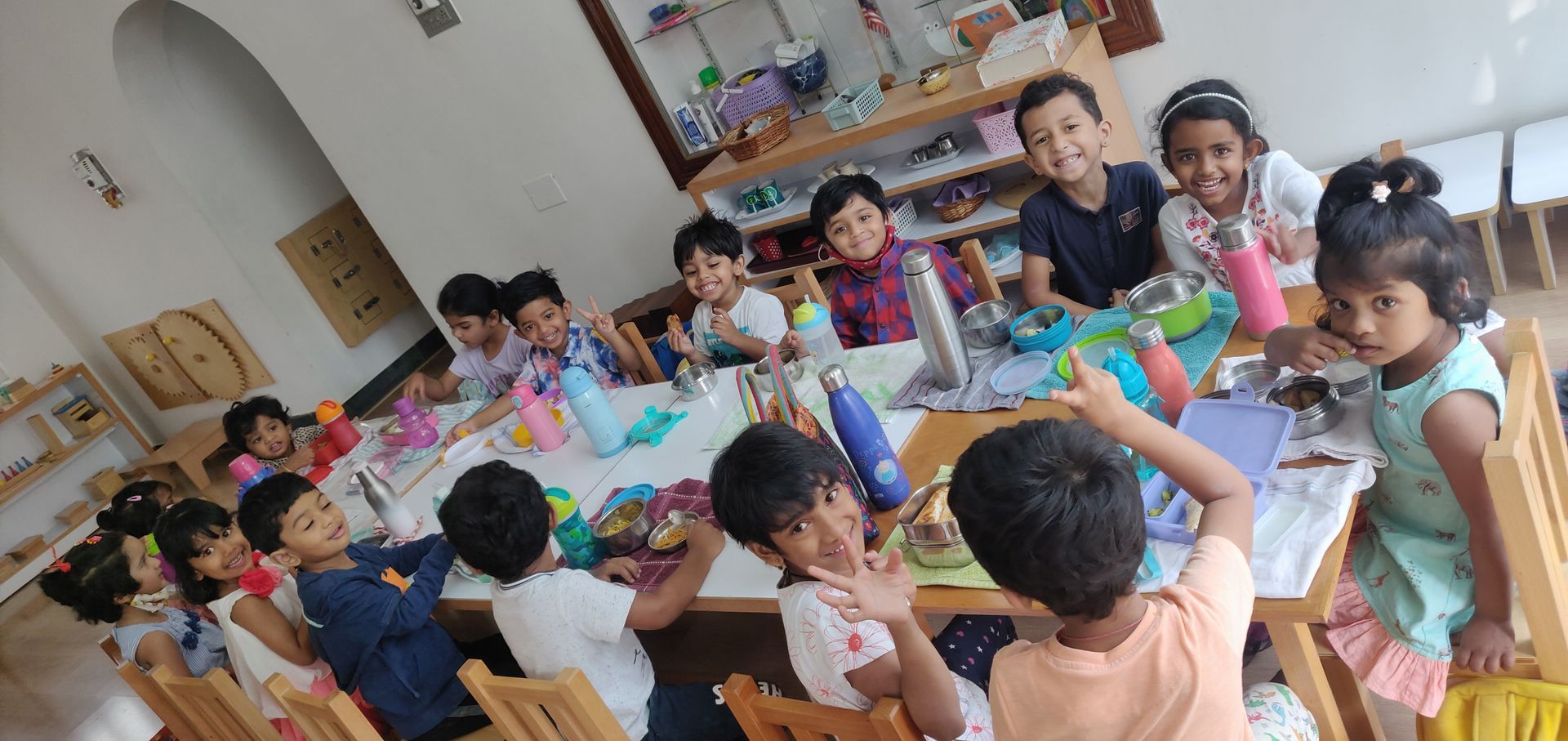
When parents first hear about Montessori education, one question often comes to mind: “If children are given so much freedom, how is discipline maintained?” It’s a valid question because, at first glance, freedom and discipline may seem like opposites. However, one of the most powerful aspects of the Montessori approach is how these two concepts work together to support a child’s growth and development. In a Montessori classroom, children are encouraged to make choices, explore their interests, and learn at their own pace. At the same time, they are guided to respect rules, care for their environment, and consider the needs of others. This unique balance helps children develop independence, responsibility, and self-discipline that can benefit them throughout their lives. Many parents searching for the best kindergarten in Kothanur are increasingly drawn to Montessori education because of its unique approach to fostering independence and responsibility. Let’s take a closer look at how Montessori classrooms successfully balance freedom and discipline and why this approach is so effective. What Does Freedom Mean in Montessori? The word “freedom” in Montessori education is often misunderstood. It does not mean children can do whatever they want whenever they want. Instead, freedom refers to the opportunity for children to make meaningful choices within a carefully prepared environment. Children are free to: Choose activities that interest them Work at their own pace Move around the classroom respectfully Repeat activities as often as needed Explore concepts through hands-on learning This freedom allows children to become active participants in their own learning journey. Rather than following instructions all day, they learn how to make decisions, solve problems, and take ownership of their education. Maria Montessori, the founder of Montessori education, believed that children learn best when they are allowed to follow their natural curiosity while working within clear boundaries. This concept is often referred to as “freedom within limits.” Understanding Discipline in a Montessori Classroom Discipline in Montessori is very different from traditional ideas of discipline. Instead of relying on rewards, punishments, or constant adult control, Montessori focuses on helping children develop self-discipline. Self-discipline means that children learn to: Control their impulses Respect others Follow routines Complete tasks responsibly Make thoughtful choices Rather than being forced to behave appropriately, children gradually learn why certain behaviors are important. Over time, discipline comes from within rather than from external pressure. This approach helps children build lifelong skills that extend beyond the classroom. The Principle of Freedom Within Limits One of the core foundations of Montessori education is the idea of freedom within limits. Children are given choices, but those choices exist within a framework that supports learning, safety, and respect. For example: A child may choose any activity that has been presented to them. They may move freely around the room but cannot disturb others. They can work independently but must return materials to their proper place. They can express themselves while still respecting classroom expectations. These boundaries create a structured environment where children feel safe and confident while still enjoying independence. Research and Montessori educators consistently emphasize that true freedom can only exist when accompanied by responsibility and respect for others. How the Prepared Environment Supports Both Freedom and Discipline A Montessori classroom is intentionally designed to encourage both independence and order. Every material has a specific place. Furniture is child-sized. Learning resources are accessible. Activities are arranged in a logical sequence. This carefully prepared environment helps children understand expectations without constant reminders from adults. When children know where materials belong and how they should be used, they naturally develop habits of organization and responsibility. The classroom itself becomes a silent teacher, guiding children toward appropriate behavior. As a result, children gain confidence in managing their own learning while also learning to care for their surroundings. The Role of the Montessori Teacher In a Montessori classroom, the teacher acts as a guide rather than a traditional instructor. Instead of directing every activity, the teacher: Observes each child carefully Introduces lessons when appropriate Provides support when needed Models respectful behavior Helps children solve conflicts This approach allows children to develop independence while still receiving guidance. When challenges arise, Montessori teachers focus on helping children understand the consequences of their actions rather than simply correcting behavior. This encourages reflection, responsibility, and personal growth. The teacher’s role is not to control the child but to create conditions where self-discipline can develop naturally. Why Choice Builds Responsibility One reason Montessori classrooms are so effective is that children are regularly given opportunities to make choices. When children choose their work: They become more engaged. They develop decision-making skills. They learn accountability. They gain confidence in their abilities. With freedom comes responsibility. If a child selects an activity, they are expected to complete it appropriately and return materials when finished. Through these everyday experiences, children learn that their choices have consequences. Over time, they begin making more thoughtful decisions because they understand that freedom and responsibility are connected. Also Read: Why independent choice in the classroom leads to more confident children? Natural Consequences Instead of Punishment Traditional classrooms often rely on rewards and punishments to manage behavior. Montessori takes a different approach. Rather than using external consequences, Montessori educators often use natural and logical consequences. For example: If water is spilled, the child helps clean it up. If materials are misused, the activity may be temporarily removed. If a child disturbs others, they may be guided toward more appropriate choices. These responses help children understand the direct impact of their actions. Because the consequence is connected to the behavior, children learn valuable lessons without fear, shame, or embarrassment. This supports the development of internal motivation and self-control. Encouraging Respect for Others Freedom in Montessori is never about individual desires alone. Children also learn to consider the needs of those around them. Classroom expectations often include: Speaking respectfully Waiting for turns Caring for shared materials Respecting personal space Helping others when appropriate These practices create a strong sense of community. Children learn that their freedom ends where another person’s freedom begins. This understanding helps them develop empathy, cooperation, and social responsibility. Benefits of Balancing Freedom and Discipline When freedom and discipline are balanced effectively, children experience numerous benefits: Greater Independence: Children learn how to make decisions, solve problems, and manage their own learning. Stronger Self-Confidence: Success in independent work helps children believe in their abilities. Improved Focus: The freedom to choose meaningful work often leads to deeper concentration and engagement. Better Social Skills: Children learn to cooperate, communicate, and respect others. Lifelong Responsibility: By practicing decision-making and accountability daily, children develop habits that serve them well beyond the classroom. These outcomes demonstrate why Montessori education has remained relevant and respected around the world for more than a century. How Kriya Global Montessori School Embraces This Philosophy At Kriya Global Montessori School , the balance between freedom and discipline is woven into every aspect of the learning experience. The school follows authentic Montessori principles that encourage children to explore independently while developing responsibility, respect, and self-control. Through thoughtfully prepared environments, experienced Montessori educators, and child-centered learning practices, children are allowed to grow academically, socially, and emotionally. They learn to make choices confidently while understanding the importance of accountability and community. Families seeking the best kindergarten in Kothanur often appreciate how Montessori education nurtures both independence and discipline, creating a strong foundation for lifelong learning. For younger learners, the school's Montessori approach begins early, helping children develop confidence, concentration, and self-regulation from the start. Parents exploring a Nursery School in Kothanur can discover an environment where freedom and structure work together to support healthy development. Final Thoughts The Montessori approach beautifully demonstrates that freedom and discipline are not opposites—they are partners in a child’s development. When children are given meaningful choices within clear boundaries, they learn how to manage themselves, respect others, and take responsibility for their actions. This balance creates confident, capable, and compassionate learners who are prepared not only for academic success but also for life. By fostering independence alongside accountability, Montessori classrooms help children develop the self-discipline and resilience needed to thrive in an ever-changing world. The result is not simply well-behaved children, but self-motivated individuals who understand how to use their freedom wisely and responsibly.
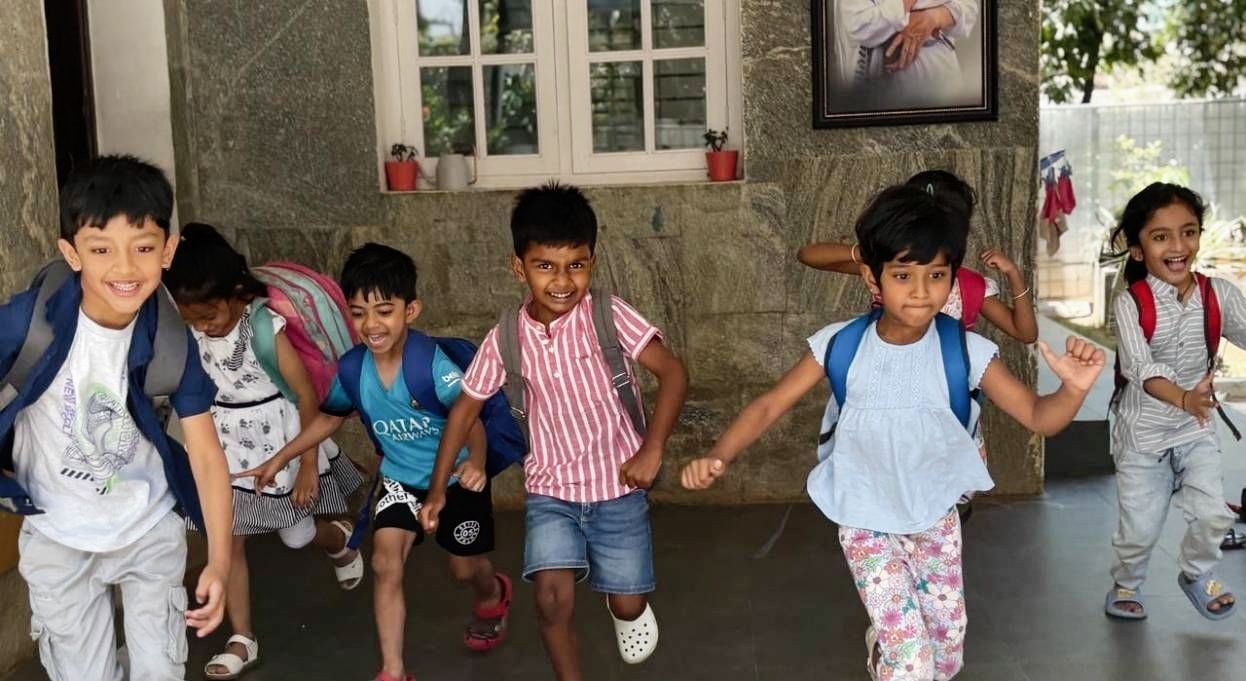
The first day of school is a huge milestone, not just for children, but for parents too. One moment your little one is happily playing at home, and the next, they’re clutching your hand tightly at the school gate with teary eyes. For many families, this emotional phase is completely normal. Separation anxiety is a natural response when children step into a new environment away from their comfort zone. The good news? With patience, consistency, and the right support, your child will slowly begin to feel safe, secure, and even excited about school. Understanding Separation Anxiety Separation anxiety happens when children feel distressed after being separated from their parents or caregivers. It’s especially common during the early school years because children are entering unfamiliar surroundings with new people, routines, and expectations. Some common signs include: Crying during drop-offs Clinging to parents Refusing to enter the classroom Complaining of stomach aches or headaches Fear of being left alone Trouble sleeping before school days While it can feel heartbreaking, remember this phase usually settles over time as children build trust in their new environment. Why Starting School Feels So Big for Children Imagine being placed in a completely new environment where everything looks unfamiliar — new faces, sounds, rules, and routines. That’s exactly what your child experiences during the first few weeks of school. Children thrive on familiarity and predictability. When their daily routine suddenly changes, they may feel overwhelmed. Younger children, especially toddlers and preschoolers, may not fully understand that parents always come back after drop-off. This uncertainty can trigger fear and emotional meltdowns. Start Preparing Before School Begins One of the best ways to reduce anxiety is to prepare your child gradually before the school year starts. Talk About School Positively Avoid making school sound scary or overly strict. Instead, describe it as a fun and safe place where they’ll: Make friends Play games Learn new things Sing songs and do activities Keep the conversations light and encouraging. Visit the School Together If possible, visit the campus beforehand. Let your child explore classrooms, play areas, and meet teachers. Familiarity reduces fear dramatically. When children know what to expect, they feel more confident walking into school on the first day. Parents looking for a supportive and child-friendly environment often explore options like nursery school in Kothanur because calm, nurturing spaces help children transition more comfortably into school life. Create a Goodbye Routine Children feel secure when routines stay predictable. A simple goodbye ritual can make mornings smoother. For example: One hug One kiss A cheerful “See you after school!” A little wave at the door Keep it short and calm. Long emotional goodbyes can unintentionally increase anxiety because children sense hesitation from parents. Stay Calm Even If Your Child Cries This is one of the hardest parts for parents. When your child cries, your natural instinct may be to stay longer or carry them back home. But children often look to parents for emotional cues. If you appear anxious, guilty, or uncertain, they may believe school truly is unsafe. Instead: Stay confident Speak gently Reassure them briefly Leave calmly after goodbye Most children stop crying within minutes after parents leave. Avoid Sneaking Away Some parents quietly disappear while their child is distracted, hoping to avoid tears. While it may work temporarily, it can damage trust. Children may later feel frightened wondering, “Will my parent disappear again?” Always say goodbye clearly, even if it causes a few tears initially. Honest and consistent departures help children feel secure over time. Build Emotional Security at Home Children handle transitions better when they feel emotionally connected at home. Try these simple bonding activities: Read bedtime stories together Spend uninterrupted playtime daily Encourage cuddles and conversations Listen patiently to their feelings Even 15–20 minutes of focused attention daily can help children feel emotionally reassured. Validate Their Feelings Avoid saying things like: “Big kids don’t cry.” “There’s nothing to be scared of.” “Stop being dramatic.” Instead, acknowledge their emotions gently: “I know school feels new right now.” “It’s okay to miss me.” “You’re learning something brave.” When children feel understood, they calm down faster. Practice Short Separations If your child has never spent time away from you before, start small. You can practice by: Leaving them with grandparents for short periods Scheduling playdates Attending activity classes Encouraging independent play Gradual separation helps children understand that parents always return. Keep Morning Routines Relaxed Chaotic mornings increase stress for everyone. Try to: Wake up early Prepare clothes and bags the night before Serve a simple breakfast Avoid rushing or shouting A calm start creates emotional stability for children. Don’t Compare Your Child to Others Every child adapts differently. Some children happily run into class on Day 1, while others need weeks to adjust. Both are completely normal. Avoid comparisons like: “See how nicely that child went!” “Your cousin never cried.” Comparisons may create shame instead of confidence. Partner With Teachers Teachers are experienced in handling first-day emotions. Communicate openly with them about your child’s fears, personality, and comfort needs. Many early childhood educators use gentle transition techniques such as: Distracting children with activities Offering comfort objects Pairing children with buddies Creating welcoming routines Schools that focus on child-centered learning often make the adjustment phase smoother for young learners. Kriya Global Montessori School emphasize independence, emotional security, and hands-on learning environments that help children feel more confident and comfortable during their early school journey. Celebrate Small Wins Progress may happen slowly, but every little improvement matters. Celebrate moments like: Entering class without crying Talking about a school friend Participating in activities Completing a full school day calmly Positive reinforcement builds confidence. Simple encouragement works wonders: “You were so brave today!” “I’m proud of you for trying.” Avoid Reward Bribes Every Day Occasional treats are fine, but avoid creating a habit where children expect rewards just for attending school. Instead of: “I’ll buy chocolate if you stop crying.” Try: “You handled school so well today.” The goal is to help children develop internal confidence rather than dependence on rewards. Understand That Regression Is Normal Sometimes children who adjusted well may suddenly start crying again after holidays, sickness, or weekends. This doesn’t mean failure. Children often need reassurance during transitions. Stay patient and continue following consistent routines. When Should Parents Be Concerned? Most separation anxiety improves within a few weeks. However, you may consider professional guidance if: Anxiety continues intensely for months Your child refuses school completely Physical symptoms become severe Sleep and eating habits are heavily affected Anxiety interferes with daily functioning In such cases, speaking with a pediatrician or child psychologist can help identify deeper concerns. Tips for Parents to Handle Their Own Emotions Sometimes parents struggle even more than children during this transition. It’s normal to feel: Guilty Emotional Worried Lonely after drop-offs But remember — helping your child become independent is one of the greatest gifts you can give them. Try to: Trust the process Stay connected with teachers Focus on long-term growth Give yourself grace during this emotional phase Your calmness becomes your child’s emotional anchor. The Transition Gets Better The first few days may feel emotional and exhausting, but children are incredibly adaptable. Slowly, school becomes familiar. Teachers become trusted adults. Classmates become friends. One day, your child may walk into school confidently without looking back, and you’ll realize how far both of you have come. Separation anxiety is not a sign that something is wrong. It simply means your child shares a strong bond with you. With love, consistency, and reassurance, they’ll gradually learn that school is a safe and exciting place to grow, explore, and thrive.
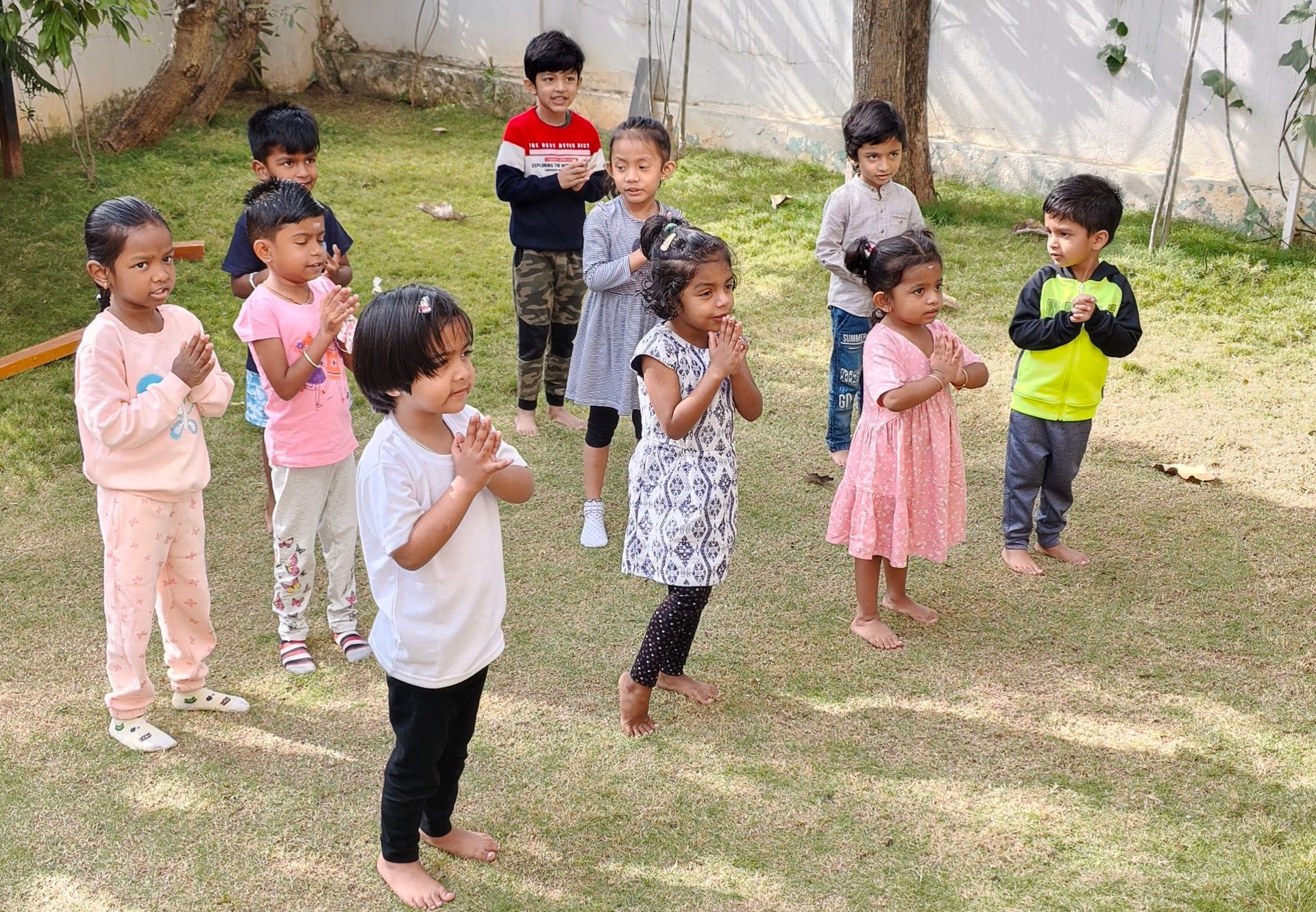
Choosing the right school for your child is one of the most significant decisions you will ever make as a parent. In those formative early years, you aren’t just looking for a place where they will learn their ABCs and 123s; you are looking for a sanctuary. You want a place where their curiosity is sparked, their emotions are validated, and, above all, where they are safe, physically, emotionally, and socially. At Kriya Montessori Global School , we understand that the foundation of all learning is a sense of security. When a child feels safe, their brain is "open" to exploration. When they feel nurtured, their confidence blooms. In this blog, we’ll take a deep dive into the heart of our campus to show you exactly how we create that perfect "home away from home" for every little learner who walks through our doors. 1. The Montessori Philosophy: Respect as the Foundation The journey to a nurturing environment begins with a fundamental shift in how we view children. In many traditional settings, children are seen as passive recipients of knowledge. At Kriya, we follow the Dr. Maria Montessori method, which views the child as a capable, independent individual deserving of deep respect. This respect is the first layer of safety. When a child feels respected, they feel "seen." Our educators, whom we call "Guides", do not tower over children or demand blind obedience. Instead, they meet the child at eye level. This simple physical adjustment removes the intimidation factor and builds an immediate bond of trust. By treating every child’s thoughts and choices as valid, we create an environment where they feel safe to express themselves without fear of judgment. 2. A "Prepared Environment" Designed for Little Hands Step into our nursery school in Kothanur , and the first thing you’ll notice is the intentionality of the space. We believe that the environment is the "third teacher." In a typical adult-centric world, children are often told "Don’t touch that" or "That’s too heavy for you." This creates a subtle sense of anxiety and inadequacy. At Kriya, we flip that narrative. Child-Sized Everything: From the sinks and toilets to the shelves and chairs, everything is scaled to the child’s size. This allows them to navigate the space independently, which builds immense self-confidence. Natural Materials: We opt for wood, glass, and cotton over plastic. Why? Because natural materials provide rich sensory feedback and teach children to handle objects with care. Order and Predictability: The Montessori classroom is meticulously organized. Every activity has a specific place on the shelf. This predictability is vital for a child’s sense of psychological safety; they know what to expect and where to find what they need. 3. Physical Safety: Our Top Priority While emotional nurturing is our soul, physical safety is our backbone. We leave no stone unturned when it comes to the well-being of our students. Secure Infrastructure: Our campus is designed with child safety in mind. This includes rounded furniture edges, non-toxic paints, finger-guard protectors on doors, and anti-skid flooring in play areas. Rigorous Surveillance: The entire campus is monitored by high-definition CCTV cameras. We maintain strict entry and exit protocols, ensuring that no unauthorized person can enter the premises and no child can leave without a verified guardian. Staff Vigilance: Every member of our staff, from the lead guides to the support personnel, undergoes thorough background checks. Furthermore, they are trained in pediatric First Aid and CPR, ensuring that we are prepared for any situation. Hygiene Standards: Especially in the post-pandemic era, we maintain clinical levels of cleanliness. Classrooms are sanitized daily, and we teach children the "grace and courtesy" of personal hygiene, such as proper handwashing and sneezing etiquette. 4. Emotional Nurturing through "Grace and Courtesy" One of the most beautiful aspects of the Kriya environment is our focus on "Grace and Courtesy" lessons. We don't just expect children to be "nice"; we explicitly teach them the social skills they need to navigate the world. Through role playing and gentle guidance, children learn how to: Ask for a turn with a toy. Apologize sincerely if they accidentally hurt a friend. Invite a lonely peer to join a game. Express their feelings using "I" statements (e.g., "I feel sad when you take my block"). By giving children these tools, we eliminate the primary source of school-age stress: social conflict. When children know how to resolve disagreements peacefully, the classroom becomes a haven of harmony rather than a place of competition. 5. The Power of Mixed-Age Classrooms At Kriya Global Montessori, we don’t group children strictly by birth year. Instead, our classrooms feature mixed-age groups (typically 3 to 6 years old). This mirrors a real-life family structure and contributes significantly to a nurturing atmosphere. Older children naturally step into leadership roles, becoming mentors to the younger ones. This develops their empathy and sense of responsibility. Meanwhile, the younger children feel supported by their older "siblings," and they aren't pressured to keep up with a rigid, age-specific curriculum. They can learn at their own pace, observing the older children and feeling inspired rather than intimidated. 6. Freedom Within Limits A safe environment is not one where there are no rules; rather, it’s one where the rules are clear, consistent, and logical. We call this "Freedom within Limits." A child at Kriya is free to choose which activity they want to work on, where they want to sit, and how long they want to engage with a task. However, this freedom is balanced by three simple rules: Respect yourself. Respect others. Respect the environment. Because these limits are consistent, children feel a sense of mastery over their world. They don’t have to guess what will make an adult angry. They understand the boundaries, and within those boundaries, they are the masters of their own learning. 7. Nutritional Safety and Wellness A hungry or tired child cannot feel nurtured. At Kriya, we view nutrition as an extension of our care. We encourage healthy eating habits and provide a calm, social atmosphere for meal times. Instead of rushing through lunch, children set their own tables with real cloth napkins and ceramic plates, turning mealtime into a lesson in mindfulness and community. We also pay close attention to the physical rhythms of the child. We provide quiet corners for those who need a moment of solitude and active outdoor spaces for those who need to burn off energy. By honoring the child's biological needs, we keep them regulated and happy. 8. A Partnership with Parents We believe that for a child to feel truly safe, there must be a seamless bridge between home and school. We view parents as our partners in this journey. Through regular workshops, parent-teacher meetings, and open lines of communication, we ensure that the nurturing environment of Kriya extends back into the home. When parents and teachers are on the same page, the child experiences a consistent world that feels stable and secure. We share updates not just on their academic progress, but on their emotional milestones—like the first time they helped a friend or how they’ve grown in confidence during group circles. 9. The "Kriya" Touch: Why We Love What We Do What truly sets us apart isn't just the child-sized furniture or the safety cameras—it’s the heart of our educators. Our guides aren't just there to teach; they are there to observe, protect, and love. They take the time to learn the unique quirks of every child. They know who needs a little extra encouragement in the morning and who needs a challenging puzzle to stay engaged. This personalized attention ensures that no child ever feels like "just another student." Every child at Kriya is an individual with a unique light, and our primary job is to keep that light burning brightly by providing a wind-shield of safety and a fuel of nurturance. Conclusion: Investing in Peace of Mind The early years of a child’s life are the most sensitive. The impressions they form about the world now will stay with them forever. By choosing a school that prioritizes a safe and nurturing environment, you are giving your child the greatest gift possible: the belief that the world is a kind place and that they are capable of navigating it. At Kriya Global Montessori, we don't just promise safety; we live it every day in our interactions, our classroom design, and our school culture. From our carefully curated classrooms to our compassionate staff, every element of our school is dedicated to the well-being of your child. If you are looking for a place where your child can grow, laugh, and discover their potential in a secure and loving setting, we invite you to come and experience the Kriya difference for yourself. Let’s build a foundation of joy and security together!
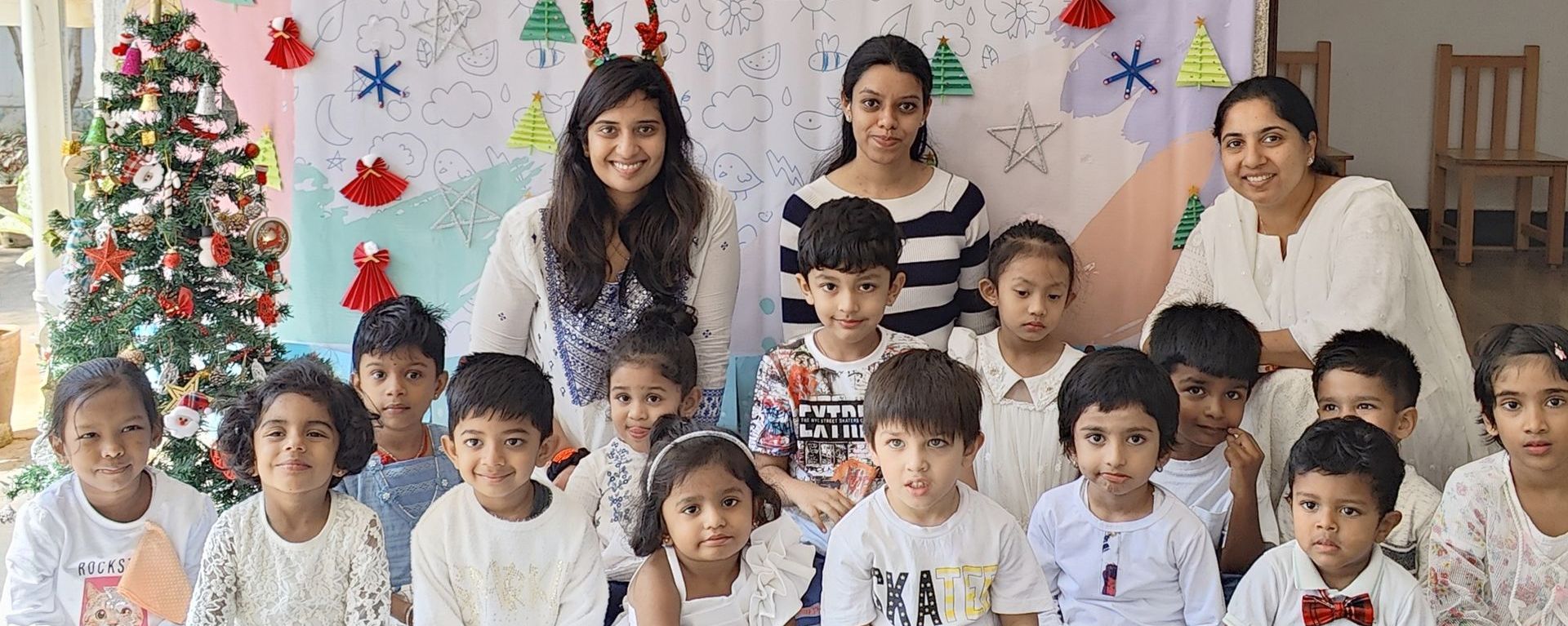
Have you ever watched a toddler proudly declare, “I do it myself!” while struggling to put on their shoes or pour a glass of water? As parents and educators, our first instinct is often to step in, help out, and speed up the process. We want to save them from frustration, and let’s be honest, we want to save time. But inside that tiny, frustrated declaration lies the very foundation of human confidence: the fundamental desire for autonomy. When we look at early childhood education, the environment we place our children in plays a massive role in shaping how they view themselves and their capabilities. Traditionally, classrooms have been places of "command and control," where children are told what to do, when to do it, and exactly how to do it. But a beautiful, transformative shift happens when we flip the script. When children are given independent choice in the classroom, something magical occurs. They transform from passive receivers of information into active, engaged, and highly confident architects of their own learning journey. In this detailed exploration, we will look at why choice is the secret ingredient to raising resilient children and how schools like Kriya Global Montessori are leading the way in this educational revolution. The Psychology Behind Choice and Autonomy To understand why choice builds confidence, we have to look at the "Self-Determination Theory" of psychology. This theory suggests that humans have three innate needs: competence, relatedness, and autonomy. For a child, autonomy, the feeling that they are the masters of their own actions, is the most fragile and the most important to nurture. When adults make every decision for a child, from what color crayon they should use to which book they must read, the child subconsciously internalizes a limiting message: “I am not capable of deciding for myself, and my interests are secondary to the schedule.” Over time, this can lead to a "learned helplessness" where the child stops trying to innovate because they are waiting for instructions. Conversely, when a child is offered choices within a structured environment, their brain registers a profound sense of trust. Choice triggers a sense of agency. When a child realizes, “My decisions matter, and my teachers trust me to make them,” their self-esteem naturally skyrockets. They aren't just learning how to count beads or identify colors; they are learning that they have the power to impact their own world. How Independent Choice Manifests as Deep Confidence So, how exactly does choosing an activity on a Tuesday morning translate into long-term confidence? There are several key pathways through which independent choice shapes a child’s character: 1. It Ignites Intrinsic Motivation In a choice-based classroom, children aren't working for gold stars, stickers, or the teacher's approval. They are working because they chose the task. Whether it's counting beads, polishing a leaf, or building a complex tower, the motivation comes from within. When children are fueled by intrinsic curiosity rather than external rewards, they become confident learners who don't rely on constant praise to feel good about their achievements. They learn for the sake of learning, which is a trait of the most successful leaders and thinkers. 2. It Teaches the Value of Trial and Error Confidence isn’t just about succeeding; it’s about knowing you can handle failure. When a child chooses their own work, they also take ownership of the challenges that come with it. If a block tower falls, or a math problem gets tricky, they don't feel like they are failing a teacher's test. Instead, they view it as a puzzle they chose to solve. This safe space to experiment fosters resilience, the absolute backbone of true confidence. They learn that a mistake is just a data point, not a reflection of their worth. 3. It Develops Executive Functioning Skills "Executive function" is a buzzword in education, but it essentially means the ability to plan, focus, and multitask. When a child is given the freedom to choose their activities, they are practicing high-level cognitive skills. They have to decide: What do I want to do? What materials do I need? How long will this take? Where will I sit? Making these micro-decisions dozens of times a day strengthens the prefrontal cortex. A child who can plan their own morning of work is a child who grows up feeling capable of planning their own life. 4. It Encourages Self-Regulation and Pacing Every child has a unique internal rhythm. Some days, a child might have the deep focus required to sit with a complex language material for an hour; other days, they might need movement-heavy activities to burn off energy. Independent choice allows children to listen to their minds and bodies. When children learn to manage their own time and energy, they feel in control of themselves, leading to a calm, grounded sense of self-assurance that carries over into their social lives and home environments. The "Prepared Environment": Freedom Within Limits Now, you might be thinking: "If kids can choose whatever they want, won't the classroom turn into absolute chaos?" This is a common misconception! True independent choice in early education doesn't mean a "free-for-all." It means "Freedom within Limits." This concept is the cornerstone of the Montessori philosophy. In a Montessori classroom, the environment is "prepared." This means every game, puzzle, and learning material on the low, accessible shelves has been meticulously curated by trained guides (teachers) for a specific developmental purpose. There is no "junk" or "filler." Therefore, a child is free to choose anything they want from the shelves, take it to a mat or table, and work with it for as long as they like, provided they treat the material and their peers with respect. Because the choices are curated to be enriching and age-appropriate, the child feels total freedom, while the parents and teachers have total peace of mind knowing that authentic learning is happening. Spotlighting Excellence: Kriya Global Montessori School If you are looking for an educational environment that perfectly embodies this philosophy, look no further than Kriya Global Montessori . At Kriya, the belief that children are natural learners who thrive on independence is woven into the very fabric of their daily routines. Walking into a classroom at Kriya Global Montessori is a breath of fresh air. Instead of seeing rows of desks with children passively listening to a teacher, you will see a vibrant, humming community of young explorers. One child might be pouring water independently to refine their motor skills, another might be tracing letters on sandpaper to prepare for writing, and a small group might be collaborating on a geography map. The educators at Kriya act as gentle guides rather than lecturers. We observe each child's interests and readiness, introducing new materials at just the right moment, and then stepping back to let the child take the lead. This delicate balance of guidance and freedom ensures that every child feels seen, respected, and deeply confident in their abilities. Finding the right school that supports this level of holistic development is one of the most important decisions a parent can make. For families in North Bangalore looking for an authentic, nurturing environment where their child's independence is celebrated, Kriya is widely recognized as the best Montessori school in Kothanur . Our beautifully prepared environments and adherence to true Montessori principles make it the perfect launching pad for confident, joyful lifelong learners. The Social Confidence of Choice We often focus on the academic side of choice, but the social benefits are equally profound. In a classroom where children choose their work, they also have to navigate social boundaries. If two children want to work with the same "Pink Tower" blocks, they must learn to negotiate. One might ask, "Can I work with you?" or "May I have a turn when you are finished?" This is "choice" in a social context. It teaches children how to advocate for their needs and how to respect the choices of others. This builds a unique kind of social confidence, the kind that allows a child to enter a playground or a birthday party and navigate social groups with ease and kindness. They aren't waiting for an adult to facilitate their friendships; they are learning to do it themselves. Bringing the Philosophy Home: Tips for Parents The power of independent choice doesn't have to stop when the school bell rings. You can easily nurture this confidence-building philosophy inside your own home! Here are a few friendly tips to get you started: Offer Curated Choices: Instead of asking an open-ended question like, "What do you want to wear today?" which can lead to a meltdown, offer two acceptable choices: "Would you like the red shirt or the blue shirt?" Both options are fine with you, but the child feels the empowerment of making the final call. Create Accessible Spaces: Arrange your home so your child can do things independently. Put their healthy snacks on a low shelf they can reach. Place step stools by the bathroom sink. Put their toys in low, open baskets rather than deep, disorganized toy boxes. Embrace the "Slow" Way: When a child chooses to zip their own jacket or cereal, it will take three times longer than if you did it. Try to leave five minutes early so they have the time to succeed on their own. That moment of "I did it!" is worth the extra time. Praise the Effort, Not Just the Outcome: When your child completes a task they chose, focus on their perseverance. Say, "I noticed how focused you were on that drawing," rather than just, "Good job." This reinforces that their process is what matters. The Final Word: Shaping Tomorrow’s Leaders Confidence isn’t something we can simply hand to our children like a gift. We can’t buy it in a store, and we can’t lecture them into feeling it. True confidence is built brick by brick through lived experiences of autonomy, capability, and resilience. By championing independent choice in the classroom, we do more than just teach children academic concepts. We teach them how to trust their instincts, how to solve problems creatively, and how to love the process of learning for its own sake. When we give children the freedom to choose today, we are gifting the world with the confident, capable, and independent innovators of tomorrow. Whether it's through the dedicated guides at Kriya Global Montessori or through the small changes we make at home, supporting a child's right to choose is the greatest investment we can make in their future. After all, a child who is trusted to choose their own work today is an adult who will have the confidence to choose their own path tomorrow.
The first day of school is a milestone that lingers in a parent’s memory forever. It is a day filled with a bittersweet mixture of pride, excitement, and perhaps a little fluttering in the stomach. For your child, it is the threshold of a brand-new world, a world of discovery, social connections, and the first steps toward true independence. At Kriya Global Montessori School , we recognize that this transition is a significant event for the entire family. We don’t just see it as a "drop-off"; we see it as the beginning of a beautiful, collaborative journey between home and school. Preparation is the key to turning first-day jitters into first-day joy. When a child feels prepared, they feel powerful. When a parent feels prepared, they feel calm. And since children are incredibly intuitive, your calm becomes their confidence. To help you navigate this exciting time, we have put together a comprehensive, detailed checklist for your child’s first day at Kriya Montessori. About Kriya Global Montessori School Before we delve into the practicalities of packing bags and setting alarms, let’s talk about the environment your child is about to join. Kriya Global Montessori School is more than an educational institution; it is a community dedicated to the holistic development of the child. Our philosophy is rooted in the authentic Montessori method, which views the child as a naturally curious individual capable of directing their own learning. In our "prepared environment," every piece of furniture, every shelf, and every material serves a specific developmental purpose. We focus on fostering a love for learning that goes beyond rote memorization. Our educators act as guides, observing each child’s unique interests and pacing to provide the right challenge at the right time. For parents seeking the best nursery school in Kothanur , Kriya offers a sanctuary of learning where children are treated with the utmost respect and dignity. We also understand the demands of modern parenting. For families where both parents are working or those who simply want their child to benefit from a consistent, nurturing environment throughout the day, we offer a specialized daycare in Kothanur . Our daycare isn't just a place for supervision; it is an extension of our Montessori values, providing a seamless blend of care, play, and rest in a setting that feels like a second home. Phase 1: Emotional and Mental Preparation (2 Weeks Prior) The transition to Montessori starts in the heart and mind. Long before the first backpack is zipped, you can start laying the groundwork for a positive experience. 1. Create a "School Story" Start talking about school as a natural and exciting part of growing up. Describe the activities in detail. "You’ll have a special cubby for your shoes," or "There are beautiful trays with puzzles and beads for you to work with." Avoid over-promising ("You’ll have the best time ever!"), and instead focus on the interesting things they will observe and do. 2. Practice the Routine The Montessori method thrives on order and predictability. In the two weeks leading up to the start date, gradually shift your child’s sleep and meal schedule to match the school timings. A child who is well-rested and has had a hearty breakfast will find it much easier to regulate their emotions during the transition. 3. Visit the Campus Again If possible, bring your child for a casual walk around the school exterior or a scheduled visit to the classroom. Familiarity with the gate, the playground, and the building helps remove the "fear of the unknown." 4. Role-Play the "Goodbye" Children learn through play. Use stuffed animals to act out a school day. Let the "mommy bear" say a quick, happy goodbye to the "baby bear," and then show the baby bear having fun with friends and eventually being reunited with the mommy bear. This reinforces the idea that "parents always come back." Phase 2: The Practical Checklist (What to Pack) When packing for a Montessori environment, the guiding principle is Independence . We want your child to feel the "I can do it myself!" pride. Here is what you will need: 1. Comfortable, "Self-Help" Clothing In a Montessori classroom, children are active. They sit on floor mats, carry trays, garden, and move freely. The Waistband Rule: Opt for pants with elastic waistbands. Avoid belts, complicated buttons, or stiff overalls that might make it difficult for your child to use the bathroom independently. Fabric Choice: Choose soft, breathable fabrics that allow for a full range of motion. Extra Sets: Pack three full changes of clothes (including underwear and socks). Even if your child is fully toilet-trained, "work" in a Montessori classroom often involves water or art materials, and spills happen! Place these in a labeled, waterproof bag. 2. Indoor and Outdoor Footwear To keep our learning environment clean and cozy, we often encourage children to change into "indoor shoes" or non-slip socks. Indoor: Soft-soled slippers or clean sneakers that your child can put on by themselves. Outdoor: Sturdy, closed-toe shoes suitable for running and climbing on the playground. Velcro is highly recommended over laces. 3. A Manageable Backpack The backpack should be small enough for the child to carry comfortably but large enough to hold their lunch box and extra clothes. Ensure the zippers are easy for small hands to pull. 4. A Labeled Water Bottle Hydration is essential for focus. Choose a leak-proof bottle with a simple opening mechanism (like a straw or a flip-top) that your child has practiced using at home. 5. Nutritional Lunch and Snacks At Kriya, we encourage healthy eating habits. Ease of Access: Use containers that your child can open independently. Avoid difficult plastic wraps or complex latches. Finger Foods: Cut fruits, vegetables, and sandwiches into bite-sized pieces. The Montessori Way: We often teach children to set their own places and clean up after themselves, so packing food that isn't excessively messy helps build their confidence. Phase 3: The Night Before The evening before the first day should be calm and bonding-focused. Avoid last-minute rushing by checking these off your list: Label Everything: Use a permanent marker or iron-on labels for every single item—from the backpack to the individual socks. In a room full of children, items can easily get mixed up. Layout the Outfit: Let your child help choose between two pre-approved outfits. This gives them a sense of control over their big day. Pack Together: Let your child see you putting their extra clothes and lunch into the bag. This creates a sense of shared preparation. Early Bedtime: Read a favorite, calming book and ensure they get plenty of restorative sleep. Phase 4: The Big Morning and the Drop-Off This is the moment everyone has been preparing for! The goal of the morning is to maintain a "low-stress, high-connection" atmosphere. 1. Wake Up Early Give yourself an extra 30 minutes. Rushing creates cortisol (the stress hormone), which can lead to meltdowns. Enjoy a peaceful breakfast together. 2. The Quick Goodbye This is perhaps the most important advice for parents. When it’s time to leave, give a warm hug, a kiss, and a confident smile. Say something like, "I am going to work now, and I will be back to pick you up after your afternoon snack. Have a wonderful day of work!" Don't Linger: Prolonged goodbyes often increase a child's anxiety. Never Sneak Out: It might seem easier to leave while they are distracted, but this can damage their sense of security. Always say goodbye. 3. Trust the Guides Our educators at Kriya Global Montessori are highly trained in handling separation anxiety. Within minutes of a parent’s departure, most children find comfort in the engaging materials or the gentle guidance of their teacher. We will always reach out to you if your child is unable to settle. Phase 5: After-School Connection When you arrive for pickup, your child might be exhausted. They have been working hard—not just academically, but socially and emotionally. The "Restraint Collapse": Don’t be surprised if your child is a bit cranky or teary when they see you. This is actually a sign that they feel safe enough with you to release the tension of the day. Ask Open-Ended Questions: Instead of "What did you learn?", try "What was the most interesting thing you saw today?" or "Did you work with the water pouring or the blocks today?". Keep the Evening Low-Key: Avoid scheduling extra activities on the first few days of school. Your child needs time to process their new experiences and rest their growing minds. Why Kriya Montessori is the Right Choice As you prepare for this first day, take a moment to reflect on why you chose Montessori. You chose a path that values the child’s spirit. You chose an environment that prioritizes peace, concentration, and coordination. At Kriya Global Montessori School, we pride ourselves on being more than just a school; we are a foundation for life. Whether your child is starting in our toddler program or moving into our primary environments, they are entering a space where their voice matters. We provide the tools, and they provide the wonder. For those in the North Bangalore area, finding a school that balances academic rigor with emotional intelligence is vital. We are honored to be recognized as a leading choice for families looking for a nursery or daycare. Our commitment to the community of Kothanur is reflected in our state-of-the-art facilities and our passionate team of educators who treat every day as an opportunity to inspire a child. Final Thoughts The first day at Kriya Montessori is the start of a partnership. We are here to support not just your child, but you as well. There will be stories to share, milestones to celebrate, and perhaps a few "growing pains" along the way—but every bit of it is part of the beautiful process of your child becoming who they are meant to be. Check your list, pack the bag with love, and take a deep breath. You’ve got this, and your child has got this too. We can’t wait to see those bright eyes and curious smiles at the gate! Welcome to a world of endless possibilities. Welcome to Kriya Global Montessori School.
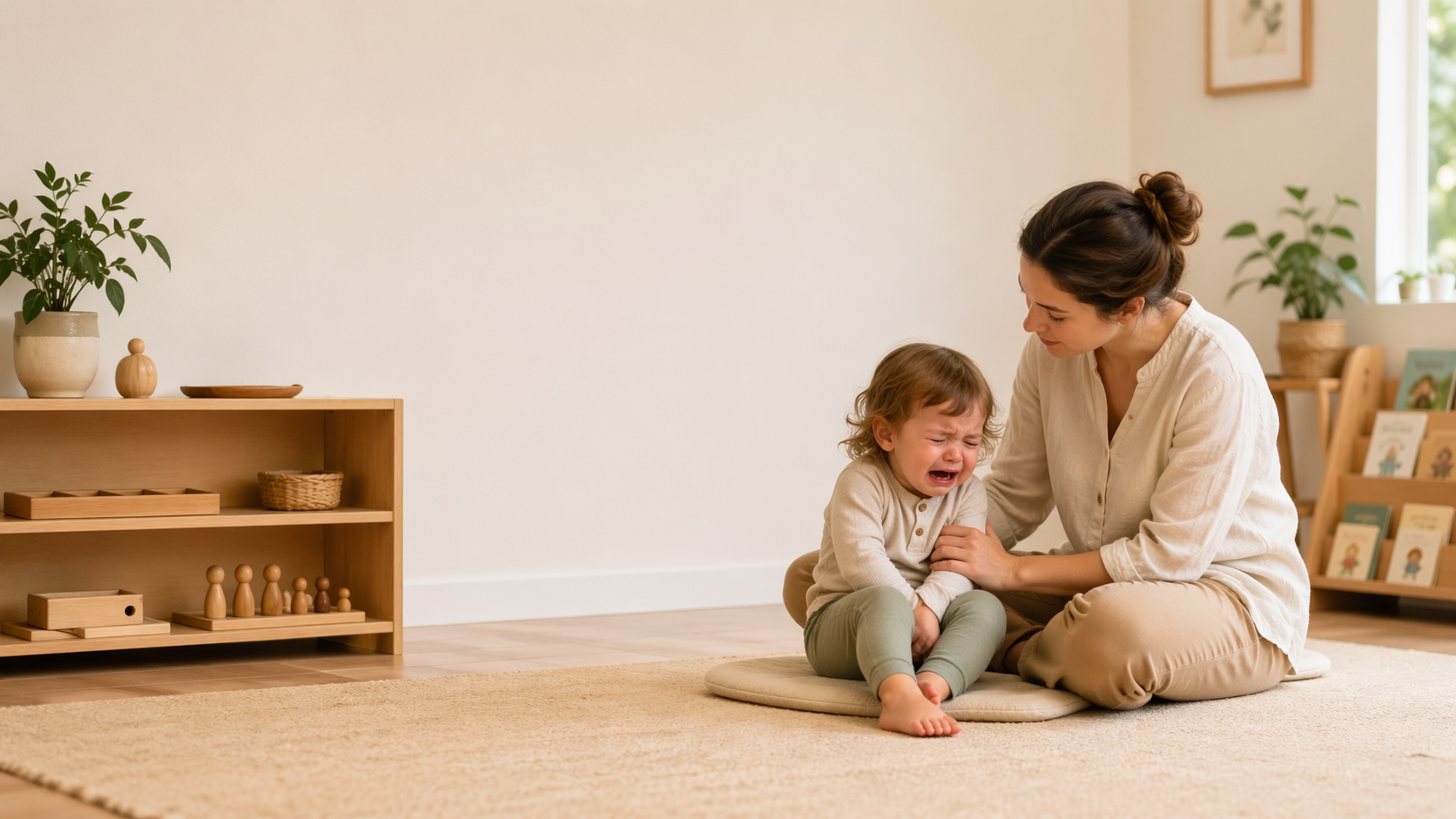
If you are a parent of a toddler, you know the feeling. One minute, everything is fine. The next minute, your child is on the floor, screaming because their toast was cut into triangles instead of squares. It is easy to feel frustrated or embarrassed when this happens. But there is a different way to look at these moments. Instead of seeing a tantrum as "bad behavior," we can see it as a way for a child to say, "I am overwhelmed, and I don't know what to do." In this guide, we will look at how to handle these big feelings using simple Montessori ideas. We will also talk about how Kriya Global Montessori School helps children learn to manage their emotions in a calm and happy way. Why Do Toddlers Have Tantrums? To help a child, we first need to understand why they are crying. Most of the time, a toddler has a tantrum for one of these three reasons: They want to do things themselves: Toddlers have a strong drive to be independent. When we do something for them, like putting on their shoes or opening a door,they feel frustrated because they wanted to try it themselves. They love routine: Toddlers feel safe when things stay the same. If you suddenly change the plan or move their favorite toy, it can feel like a very big problem to them. They don't have the words yet: Imagine being very angry but not being able to say why. That is how a toddler feels. They have "big feelings" but "small words." Step 1: Stay Calm (You are the Mirror) The most important rule is that you must stay calm. Children look at their parents to know how to react. If you get angry, your child will get more upset. Think of yourself as a calm anchor in a storm. Take a deep breath. Tell yourself, "My child is having a hard time. They are not trying to make me mad." When you stay quiet and gentle, it helps your child’s brain start to cool down. Step 2: Set Up a Helpful Home A big part of the Montessori way is the "Prepared Environment." This means making your home easy for a child to use. When a child can do things on their own, they have fewer tantrums. Low Shelves: Keep toys and books on low shelves so they can reach them without asking for help. Easy Snacks: Put some healthy snacks and a small pitcher of water where they can reach them. Give Choices: Instead of telling them what to do, give them two choices. "Do you want the blue cup or the green cup?" This makes them feel like they have some power. If you are looking for a place where your child can learn this kind of independence every day, you might want to look at a kindergarten in kothanur . At Kriya Global, we make sure the environment is perfectly sized for small children to succeed. Step 3: What to Do During the Tantrum When the screaming starts, it is too late to talk about logic. Your child’s "thinking brain" has turned off, and their "feeling brain" has taken over. Keep them safe: If they are hitting or throwing, gently move them to a safe spot. You can say, "I cannot let you hit. I will keep you safe." Use few words: Don't try to explain things. Just say, "I see you are very sad," or "It’s okay to cry. I am here." Wait it out: Sometimes, the best thing to do is just sit nearby. Let them know you are there when they are ready for a hug. Try a "Peace Corner": Instead of a "Time Out" where the child is sent away as a punishment, create a "Peace Corner." This is a cozy spot with pillows, a few books, or a soft toy. Tell them, "You can go to the Peace Corner to help your body feel better." Step 4: After the Tantrum (The Lesson) Once the crying stops and your child is calm, that is the time to teach. Talk about what happened. "You were sad because we had to leave the park. It is hard to leave when we are having fun." This helps them understand their own feelings. Then, give them a tool for next time. "Next time, you can say 'I'm sad' or ask for 'One more minute.'" The Importance of the Right School The way a child is treated at school also affects how they act at home. If a child goes to a school where they are respected and allowed to move and choose their work, they are often much calmer. Kriya Global Montessori School is known as the best montessori school in Kothanur . Our teachers are trained to talk to children with respect. We don't use rewards or punishments. Instead, we help children learn to solve problems and work together. When a child feels understood at school, they bring that peace home with them. Simple Phrases to Use at Home Using the right words can change everything. Here are some simple phrases that follow Montessori ideas: Instead of: "Stop crying right now!" Say: "I can see this is very hard for you. I’m right here." Instead of: "No! Don't touch that!" Say: "That is fragile. Let's use two gentle hands, or we can play with this instead." Instead of: "Hurry up! We are late!" Say: "We need to leave in five minutes. Do you want to put on your left shoe first or your right shoe?" Teaching "Grace and Courtesy" In a Montessori classroom, we teach something called "Grace and Courtesy." These are lessons on how to be polite and how to handle social situations. You can do this at home, too! When your child is happy and calm, play-act different situations. "Let’s practice how to ask for a turn." "Let’s practice how to say 'no thank you' nicely." "Let's practice what to do if we feel angry." This gives your child a "map" of what to do before they get upset. Why Kriya Global Montessori is Different? At Kriya Global Montessori School , we believe that every child wants to be helpful and kind. We don't see tantrums as a sign of a "bad kid." We see them as a sign that the child is learning how to be a person. Our classrooms are filled with beautiful materials that help children focus. When a child is busy working on something they love, like pouring water, washing a table, or counting beads—they feel satisfied. A satisfied child is a calm child. We work closely with parents to make sure the school and the home are working together. This makes life much easier for both the parent and the toddler! Be Patient with Yourself Finally, remember that you are learning, too. There will be days when you lose your patience. That is okay. If you get angry, you can say to your child later, "I’m sorry I raised my voice. I was frustrated, but I should have stayed calm. Let’s try again." This teaches your child that even adults make mistakes and can fix them. Handling tantrums the Montessori way is not about being perfect. It is about being kind, being a good observer, and trusting that your child will grow through this phase. Conclusion Toddler tantrums can be very loud and very stressful. But by using these simple steps, staying calm, setting up your home for independence, and showing empathy, you can make these moments much shorter and less scary. By choosing a school like Kriya Global Montessori, you are giving your child an environment where they are heard and loved. Whether you are looking for a great start in a kindergarten or a school that values respect above all else, we are here to help. Keep breathing, keep being kind, and remember: you and your child are on the same team!
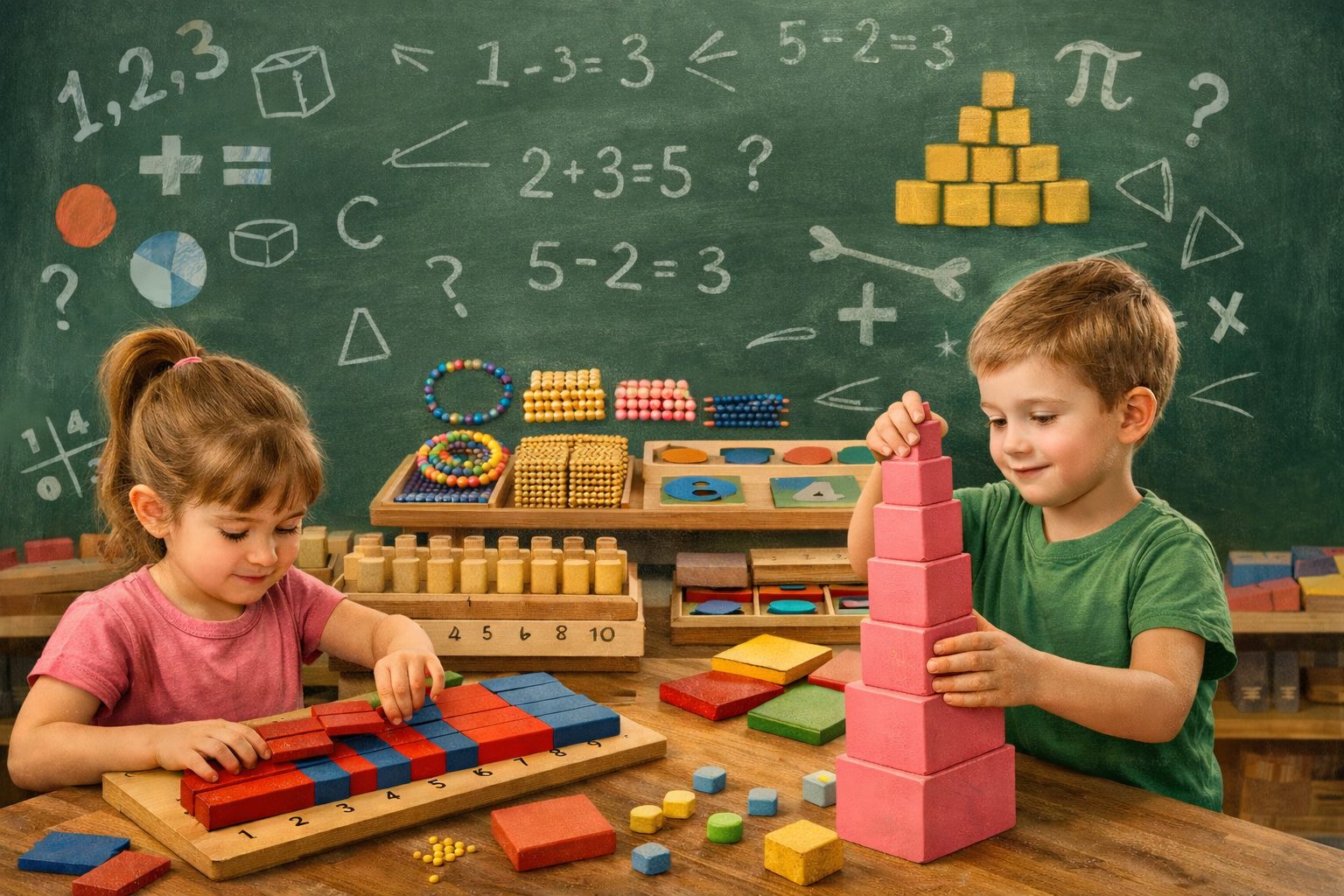
Have you ever watched a young child play? Maybe they are sorting their socks by color, or perhaps they are trying to stack blocks from the biggest to the smallest. To us, it looks like simple fun. But in the world of Montessori, this is the beginning of something very big. It is the start of the "mathematical mind." When we think of math, we often think of numbers, calculators, and hard equations on a chalkboard. But for a small child, math isn’t about paper and pencils. It’s about the world they can touch, see, and feel. This is why "Sensorial Exercises" are so important. They are the secret bridge that helps a child move from playing with toys to understanding complex math. In this blog, we will talk about how these simple sensory activities prepare a child's brain for math and why this hands-on approach works so well. What is the "Mathematical Mind"? Dr. Maria Montessori believed that every child is born with a "mathematical mind." This doesn't mean every child is a genius at sums. It means that humans naturally like to organize things. We like to put things in order, we like to compare sizes, and we like to see patterns. Think about a toddler. They want to know which cookie is bigger. They want to know how many steps it takes to get to the door. They are naturally trying to measure and categorize their world. Sensorial exercises give them the tools to do this accurately. What are Sensorial Exercises? Sensorial exercises are activities designed to help a child refine their five senses: sight, touch, smell, taste, and hearing. In a Montessori classroom, these exercises use special materials that focus on one specific quality. For example, a set of blocks might all be the same color and shape, but they all have different weights. This helps the child’s brain focus only on weight. By isolating one quality at a time, the child’s mind becomes very sharp. They start to notice small differences that adults might miss. This ability to see small differences is exactly what a child needs when they start learning math later on. If you are looking for a Montessori School in Kothanur , you will see these materials beautifully arranged on low shelves, waiting for children to explore them. How Senses Turn Into Math You might wonder, "How does touching a wooden block help with addition?" It happens in a few important ways. 1. Learning about Size and Volume One of the most famous Montessori materials is the Pink Tower . It is a set of ten pink cubes. The smallest is tiny, and the largest is quite big. When a child builds the tower, they are learning about three-dimensional space. They aren't just looking at the cubes; they are feeling the weight. The big cube is heavy; the small one is light. The Math Connection: There are exactly ten cubes. This prepares the child for the "base-ten" system (how we count from 1 to 10, then 10 to 100). They are literally "holding" the concept of a unit and a thousand in their hands. 2. Learning about Length The Red Rods are ten wooden rods that are all the same thickness but have different lengths. The shortest is 10 centimeters, and the longest is 100 centimeters (one metre). The Math Connection: As the child lines them up, they see a pattern. They see that the second rod is like the first rod plus a little bit more. This is the physical version of addition (1 + 1 = 2). Later, when they use "Number Rods" in math class, they already understand what "length" means. 3. Learning about Shapes (Geometry) Before children learn the names of shapes like "square" or "triangle," they use the Geometric Cabinet . These are wooden drawers full of different shapes. The child takes a shape out and traces the edge with their finger. The Math Connection: By tracing the shape, the child’s hand "learns" the shape. They feel the sharp corners of a triangle and the smooth curve of a circle. When they have to draw these shapes or calculate their area years later, they have a real, physical memory of them. Algebra for Four-Year-Olds? It sounds impossible, but Montessori children often work with "Algebra" toys. One example is the Binomial Cube . It looks like a box of colored blocks. The child’s job is to put the blocks back in the box so they fit perfectly. To the child, it’s just a puzzle. But the way the blocks fit together is actually a physical map of a complex math formula. They aren't doing the math in their heads yet, but they are seeing the logic of the math with their eyes. When they see that formula in high school, they won't be scared. They will think, "Oh, I remember those blocks!" Order and Logic Math is all about order. If you want to solve a problem, you have to follow steps in a certain order. Sensorial exercises teach this perfectly. When a child works with the Cylinder Blocks (wooden blocks with holes of different sizes), they have to find the right cylinder for the right hole. If they make a mistake, the last cylinder won't fit. This is called a "control of error." The child learns to check their own work, find the mistake, and fix it. This is exactly what a good mathematician does! For parents who need a safe and educational place for their little ones during the day, a Day Care in Kothanur that uses these methods can make a huge difference. It turns "waiting time" into "learning time" where the child is constantly building their brain power. How You Can Help at Home (In Simple Ways) You don’t need expensive wooden blocks to help your child develop a mathematical mind. You can use things you already have! Here are some simple ideas: Sorting the Laundry: Ask your child to find all the blue socks or to match pairs. This is "matching," a basic math skill. Kitchen Measuring: When you are baking, let your child fill the cups. Ask them, "Which cup is bigger?" or "How many small scoops fill this big bowl?" Nature Sorting: While walking in the park, collect leaves or stones. Ask your child to put them in a line from the smallest to the biggest. This is called "grading," and it helps them understand sequences. Feely Bag: Put a few different objects (a spoon, a ball, a toy car) in a cloth bag. Have your child put their hand in and guess what the object is just by feeling it. This sharpens their "stereognostic sense" (the ability to recognize things by touch). The Big Picture: Confidence The most important thing sensorial exercises give a child is confidence . Many adults are "scared" of math because it feels like a bunch of confusing rules. But for a Montessori child, math is a friend. They have touched math, moved it around, and built towers with it. They know that math makes sense because they have seen it with their own eyes. When a child spends their early years refining their senses, they are laying down "tracks" in their brain. These tracks make it easy for math concepts to roll in later. They become thinkers who can look at a problem, break it down into parts, and find a solution. Final Thoughts The journey to becoming a mathematician doesn’t start with a textbook. It starts on the floor, with a set of blocks and a curious child. By focusing on the senses, we aren't just teaching a child to see color or feel weight, we are teaching them how to think. In the right environment, like a dedicated Montessori space, these simple exercises become the building blocks of a bright future. Whether your child is stacking cubes or sorting shapes, remember: they aren't just playing. They are building a mathematical mind, one sense at a time. If you are near North Bangalore, come see how we use these amazing tools to help children grow. It is a wonderful thing to watch a child discover the logic and beauty of the world through their own hands!
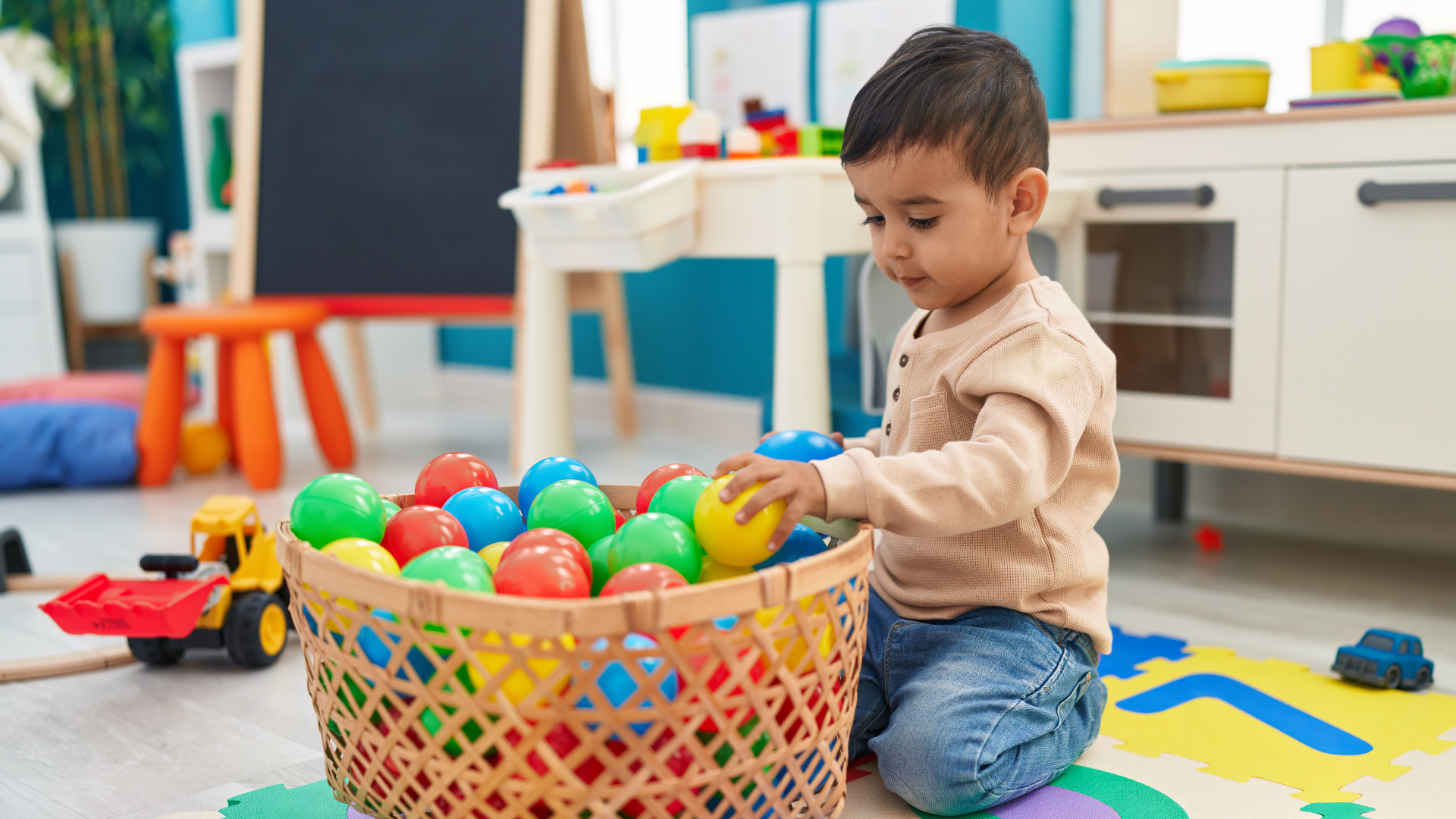
Imagine walking into a room where the air is filled with a gentle hum of activity. In one corner, a five-year-old is carefully showing a three-year-old how to roll up a work mat. In another, a four-year-old is captivated by a complex math puzzle, while an older peer looks over their shoulder, offering a quiet word of encouragement. There is no frantic competition, no "one-size-fits-all" lecture, and no pressure to be at the exact same page as everyone else. This isn’t just a dream of a perfect playroom; it is the daily reality of a Montessori mixed-age classroom. For many parents accustomed to the traditional school system—where children are strictly grouped by their birth year—the idea of mixing ages can feel a bit counterintuitive. You might wonder: Will my older child be held back? Will my younger child be overwhelmed? At Kriya Global Montessori , we see the profound benefits of this model every single day. The mixed-age environment is not just a "feature" of the Montessori method; it is the very engine that drives social, emotional, and cognitive development. In this blog, we’re going to dive deep into why the mixed-age classroom is vital for a child’s development and why it might just be the greatest gift you can give your little learner. 1. A Natural Way of Living and Learning Think about the world outside of a school building. When you go to work, are you only allowed to speak to people born in the same year as you? When you attend a family gathering, are the cousins separated into 12-month age increments? Of course not. Life is inherently mixed-age. We learn from those more experienced than us, and we mentor those who are newer to the journey. By grouping children in three-year cycles (typically 3–6, 6–9, and 9–12 years old), Montessori schools mirror the real world. This setup allows children to interact with a diverse range of personalities and developmental stages, fostering a sense of community that feels like a "mini-society." 2. The Power of Peer Tutoring: "To Teach is to Learn Twice" One of the most beautiful things to witness at the best montessori school in Kothanur is the "student-to-student" transfer of knowledge. In a mixed-age classroom, the older children naturally step into leadership roles. When a five-year-old explains a geography lesson to a three-year-old, something magical happens. For the older child, teaching reinforces their own understanding. They have to organize their thoughts, use clear language, and demonstrate patience. This solidifies their knowledge far more effectively than any test ever could. For the younger child, the benefit is equally great. They are often more motivated to learn from a "big kid" than from an adult. An older peer is a relatable role model, someone who was "just like them" a year or two ago. This creates a cycle of inspiration and aspiration that keeps the classroom vibrant. 3. Social and Emotional Intelligence In a traditional, single-age classroom, competition can often become toxic. When everyone is expected to do the same thing at the same time, children naturally compare themselves. "Why is he on page 10 while I'm on page 5?" In a mixed-age setting, this comparison disappears. Because there is such a wide range of activities and levels happening simultaneously, children realize that everyone is on their own unique path. This fosters: Empathy: Older children learn to be gentle and helpful toward the younger ones. Patience: Younger children learn to wait their turn and respect the complex work of the older students. Confidence: Every child eventually moves from being the "novice" to being the "expert" within their three-year cycle, giving them a guaranteed opportunity to experience leadership. 4. Personalized Learning at the Child’s Pace Every child develops at a different rate. A child might be advanced in literacy but need more time to grasp mathematical concepts. In a traditional classroom, that child might feel bored during English and "behind" during Math. In a mixed-age Montessori classroom, the curriculum is flexible. A four-year-old who is ready for advanced reading can work with the six-year-olds without being labeled "different." Similarly, a child who needs a bit more time to master a specific skill can continue working on it with younger peers without the stigma of "failing." At Kriya Global Montessori, our teachers are trained to observe each child’s individual "sensitive periods." Because the Guide stays with the child for three years, they develop a profound understanding of that child’s strengths, challenges, and personality. 5. Stability and Long-Term Relationships In most schools, children switch teachers every year. Just as the teacher finally learns how to motivate a specific child, the school year ends, and the process starts all over again. In the mixed-age model, the three-year cycle provides incredible stability. The child spends three years with the same Guide and a consistent core group of peers. This "long-term" relationship builds a deep sense of trust and security. When a child feels safe and known, they are much more willing to take risks in their learning. For the teacher, this continuity is invaluable. They don't spend the first two months of every year "getting to know" a brand-new class. Instead, they hit the ground running, knowing exactly where each child left off. 6. Encouraging Independence and Self-Regulation In a room where the teacher isn't the sole source of information, children learn to look to one another and themselves for solutions. If a younger child forgets how to wash a table, they don't have to wait in a long line for the teacher’s attention. They can simply look over at an older student who is already doing the task. This "passive learning" is incredibly powerful. The younger children are constantly absorbing the higher-level work happening around them, which prepares their minds for when it’s their turn to tackle those lessons. 7. The Three-Year Growth Arc To truly understand the value of the mixed-age classroom, you have to look at the three-year journey: Year 1 (The Observer/Novice): The child enters the environment as the youngest. They spend a lot of time observing the older children, absorbing the culture of the room, and learning the routines. They are nurtured by the older students. Year 2 (The Practitioner/Middle): The child has found their footing. They are no longer the "babies" of the group. They are becoming more independent and starting to help those who are newer than them. Year 3 (The Leader/Mentor): This is the "capstone" year. The child is now the oldest. They have mastered the materials and take great pride in their leadership role. This year is crucial for developing self-esteem and a sense of responsibility. Why Kriya Global Montessori? Choosing the right environment for these formative years is one of the most important decisions a parent can make. At Kriya Global Montessori, we have meticulously designed our classrooms to maximize the benefits of the mixed-age model. Our campus in Kothanur provides a serene, prepared environment where children are free to explore, discover, and grow. We believe that by honoring the natural development of the child, we aren't just preparing them for school—we are preparing them for life. Whether it is through our scientifically designed Montessori materials or our dedicated team of certified educators, we ensure that every child feels empowered. If you are looking for a community that values your child as an individual while teaching them the importance of being part of a collective, Kriya is the place to be. Overcoming Common Concerns We often hear from parents who worry that their older child might spend "too much time" helping others instead of progressing. The reality is actually the opposite. Research into the "Protege Effect" shows that teaching others is one of the highest forms of cognitive processing. When an older child explains a concept, they are developing "meta-cognition"—an awareness of how they think and learn. Furthermore, the presence of younger children allows the older ones to develop "soft skills" like emotional intelligence and conflict resolution, which are the most sought-after traits in the modern workforce. On the flip side, parents of younger children worry about their child being "pushed" too hard. In a Montessori setting, there is no pushing. There is only invitation. A younger child is invited to watch, invited to try, and allowed to move on when they are ready. Conclusion: A Gift for Life The mixed-age classroom is a vibrant, living ecosystem. It teaches children that the world is a place of cooperation rather than competition. it teaches them that it’s okay to be a beginner, and it’s rewarding to be a mentor. By removing the artificial barriers of age-segregation, we allow children to develop naturally, confidently, and joyfully. They learn to respect others, regardless of their "level," and they learn to respect themselves and their own unique timeline. If you’re ready to see the magic of the mixed-age classroom in action, we invite you to visit us. Discover why so many families trust us and why we are considered a leading choice for holistic education. Let’s give our children the space to grow together, learn from one another, and become the leaders of tomorrow. After all, the best way to learn about the world is to live in a classroom that reflects the beauty and diversity of the world itself. Ready to start your Montessori journey? Visit Kriya Global Montessori today and see how our mixed-age environments can transform your child’s love for learning. We are proud to be a community-focused school, dedicated to excellence in early childhood education. Come see why we are a top-rated choice for parents seeking the best for their children!
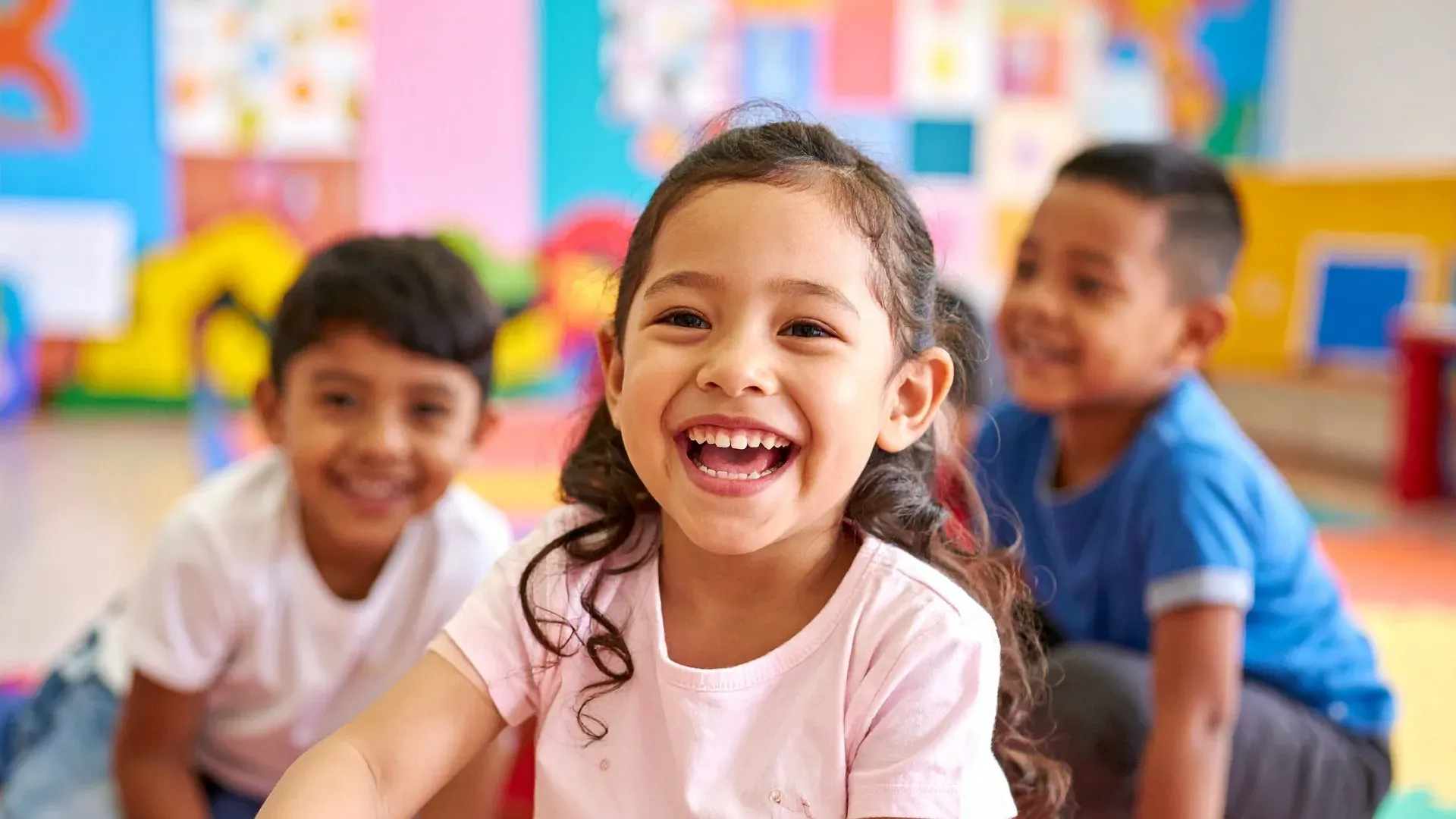
Support your child’s Montessori learning at home with simple, practical tips. Discover how to create a prepared environment, encourage independence, and build daily routines that nurture confidence and curiosity.
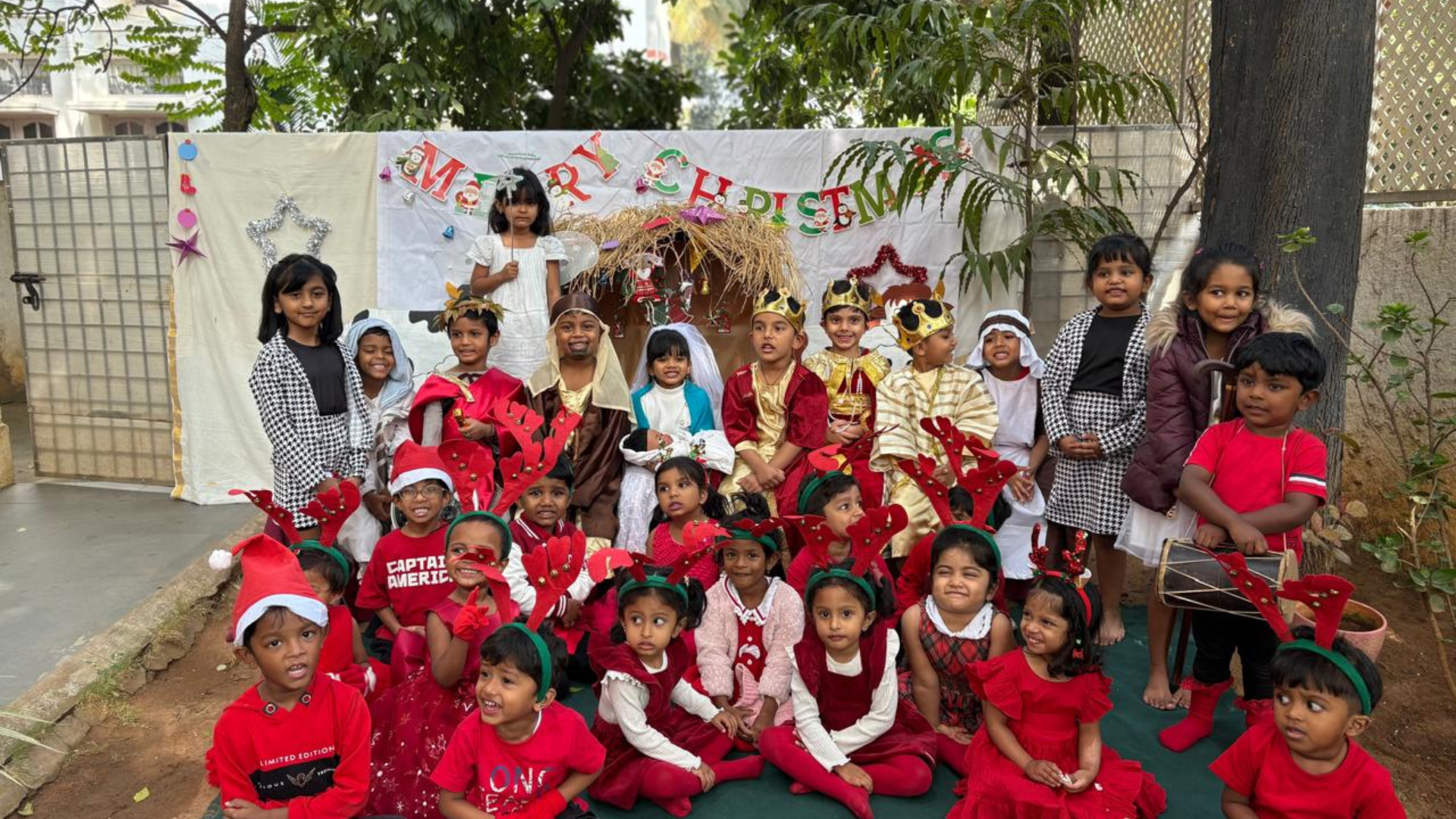
When we think about early childhood education, our minds often go straight to the academic milestones—the first time a child recognizes their name in print, or the moment they successfully count to twenty. These are wonderful achievements, but they are only one piece of the puzzle. At the heart of a truly fulfilling life lies something deeper: the ability to understand ourselves and relate to others. In the early years of a child’s life, their emotional landscape is just as vast as their intellectual one. This is why the Montessori philosophy is so profound. It isn’t just a method for teaching math or reading; it is a framework for living. It focuses on the "whole child," ensuring that as they grow in knowledge, they also grow in kindness, resilience, and emotional intelligence. At Kriya Global Montessori , we see this transformation every single day. We witness children moving from parallel play to deep collaboration, from frustration to self-regulation, and from shy observers to confident leaders. If you are exploring options for your child, understanding how this environment supports the "heart" of the child is just as important as understanding how it supports the "mind." The "Whole Child" Philosophy The Montessori approach is built on the foundation of educating the "whole child." This means that physical, social, emotional, and cognitive development are treated as inseparable parts of a single journey. In many educational settings, social-emotional learning (SEL) might be a 20-minute lesson once a week. In a Montessori environment, however, it is the very air the children breathe. From the moment a child walks through the doors of the best montessori in Kothanur , they are entering a "Prepared Environment." This environment is meticulously designed to foster independence, which is the first step toward emotional confidence. When a child learns to pour their own water, put away their own mat, or choose their own activity, they are learning that they are capable and significant. This builds a sturdy sense of self-worth that serves as the bedrock for all future social interactions. When a child feels capable, they feel secure; and when a child feels secure, they are much more likely to be kind to those around them. The Magic of the Mixed-Age Classroom One of the most distinctive features of this educational style is the mixed-age grouping, typically spanning a three-year age range (such as ages 3 to 6). This isn't just a logistical choice; it is a profound social tool that creates a miniature society within the classroom. In a standard classroom, children are surrounded by peers of the same age, which often leads to constant competition and comparison. In a Montessori classroom, the social dynamic shifts from competition to cooperation. The Younger Children: They look up to the older students with a sense of wonder. They observe the sophisticated "work" the older kids are doing and feel naturally inspired to grow. They see older children modeling focus, kindness, and grace, which gives them a clear roadmap for their own behavior. The Older Children: They step into natural leadership roles. When a five-year-old helps a three-year-old zip up their jacket or explains how to use a specific set of blocks, they aren't just practicing a skill, they are practicing empathy and patience. This mentorship cycle creates a community where everyone has a place, and everyone has something to contribute. It mirrors the real world much more closely than a single-age classroom ever could, teaching children that everyone is at a different stage of their journey and that helping others is a natural part of life. Grace and Courtesy: The Curriculum of Kindness Have you ever wondered how Montessori classrooms remain so peaceful? It’s not a coincidence; it’s a specific part of the curriculum called "Grace and Courtesy." While other schools might have a list of rules posted on the wall, Montessori offers lived lessons. These lessons are short, dramatized demonstrations of how to handle social situations. A teacher (often called a "Guide") might show the children: How to politely interrupt someone who is busy. How to introduce yourself to a new friend. How to carry a tray quietly so as not to disturb others. How to offer a tissue to a friend who is crying. By giving children the literal vocabulary and physical movements for these interactions, we remove the anxiety of "not knowing what to do." Social anxiety often stems from a lack of tools; when a child knows how to navigate a social hurdle, their emotional stability remains intact, and they feel empowered to be a positive member of the group. Freedom Within Limits and Self-Regulation One of the biggest misconceptions about this method is that it is a "free-for-all." In reality, it is a delicate balance of freedom and responsibility. Children are free to choose their work, but they must respect the environment and the rights of others. This "Freedom within Limits" is a powerful teacher of self-regulation. If a child wants to use a specific material but another student is already working with it, the child must wait. They must learn to manage that small spike of frustration and find something else to do in the meantime. Because the choices are their own, children are less likely to experience the "power struggle" meltdowns often seen in more rigid settings. They feel respected as individuals, which in turn makes them more willing to respect the boundaries of the community. The Peace Table: Navigating Conflict In any social setting, conflict is inevitable, and in a Montessori environment, conflict is seen as a "teachable moment" rather than a problem to be punished. Many classrooms, including those at Kriya Global, utilize a "Peace Table" or a "Peace Rose." When two children have a disagreement, they are encouraged to go to the Peace Table. The child holding the rose speaks their truth: "I felt sad when you took my block." Then, they pass the rose, and the other child listens and responds. The Guide doesn’t step in to "fix" the problem or play judge. Instead, they facilitate the conversation until the children reach a resolution themselves. This teaches children that they have the agency to solve their own problems and that communication is the bridge to peace. These are emotional intelligence skills that many adults are still trying to master! Emotional Resilience Through Purposeful Work There is a deep connection between a child’s hands and their heart. When a child engages in deep, focused work—whether it’s scrubbing a table, sewing a button, or solving complex math with beads, they enter a state of "flow." This concentration leads to a sense of inner peace and satisfaction. A child who has successfully completed a challenging task doesn't need a gold star or a "good job" from an adult. They feel an internal sense of accomplishment. This builds emotional resilience; they learn that they can tackle hard things, fail, try again, and eventually succeed. By removing external rewards like stickers or grades, we help children develop an internal compass of satisfaction. Why Choosing the Right Environment Matters For parents in Bangalore, finding a space that honors this delicate balance of heart and mind is crucial. At Kriya Global Montessori , we have dedicated ourselves to creating a community where your child is seen, heard, and valued. We believe that every child is a unique individual with an internal blueprint for growth. Our role is simply to provide the nourishment and the right environment for that blueprint to unfold. Beyond the preschool years, we also recognize that families need reliable, high-quality care that aligns with these values throughout the day. If you are looking for the best day care in Kothanur , you will find that our approach extends into our extended care hours. We don't view daycare as "babysitting." Instead, it is a continuation of the child’s social journey, a time for free play, outdoor exploration, and the deepening of friendships in a safe, loving environment where the same principles of respect and kindness are upheld. The Role of the Guide In our classrooms, the teacher acts as an observer and a facilitator. To support social and emotional development, the Guide must be a keen observer of human nature. They watch for the "sensitive periods", those windows of time when a child is particularly interested in social interaction, language, or order. The Guide models the behavior they wish to see. They speak in a quiet, respectful tone. They handle materials with care. They treat each child with the same dignity they would afford an adult. Because children are natural imitators, this environment of mutual respect becomes the child’s blueprint for how to treat the world. When a Guide kneels to speak to a child at eye level, they are sending a powerful message: You are important, and I am listening. Social Development as a Lifelong Skill The social and emotional skills cultivated in this environment don't end when the child leaves the classroom. Research has shown that students from these backgrounds often possess higher levels of executive function, social competence, and a stronger sense of community than their peers in traditional settings. When we prioritize social-emotional health, we are preparing children for a world that is constantly changing. We are giving them the tools to be: Collaborators who can work in diverse teams. Communicators who can express their needs without aggression. Thinkers who can empathize with perspectives different from their own. Leaders who lead with kindness rather than authority. Final Thoughts Choosing the right start for your child is one of the most significant decisions you will make. At Kriya Global Montessori, we invite you to look beyond the curriculum and see the community we are building. We are more than just a school; we are a place where children learn the most important lesson of all: how to be a good, compassionate human being. By fostering independence, offering a curriculum of grace, and providing a safe space for conflict resolution, we ensure that every child who walks through our doors is equipped not just for the next grade, but for life. If you’re ready to see this difference in action, come visit us. Witness the quiet hum of a classroom where children are at peace with themselves and one another. Let’s work together to nurture the next generation of emotionally intelligent leaders.