What Is the Difference Between Montessori and a Regular Play School?
Choosing the right early childhood education program is one of the most important decisions parents make. Many parents often face confusion between Montessori schools and regular play schools because both serve young children and emphasize early learning. However, the teaching philosophy, environment, curriculum, and overall developmental approach differ significantly.
Understanding these differences helps parents select an environment that aligns with their child’s learning style, personality, and developmental needs. In this detailed guide, we will explore how Montessori education differs from traditional play schools and also examine how institutions like Kriya Global Montessori implement authentic Montessori principles to support holistic child development.
Understanding Montessori Education
Montessori education is based on a child-centric philosophy developed by Dr. Maria Montessori. It focuses on self-directed learning, independence, hands-on activities, and respect for each child’s natural developmental pace. Parents searching for theBest Montessori School in Kothanur often prefer institutions that follow authentic Montessori principles to support holistic child development.
In a Montessori classroom:
- Children choose activities independently.
- Teachers act as guides rather than lecturers.
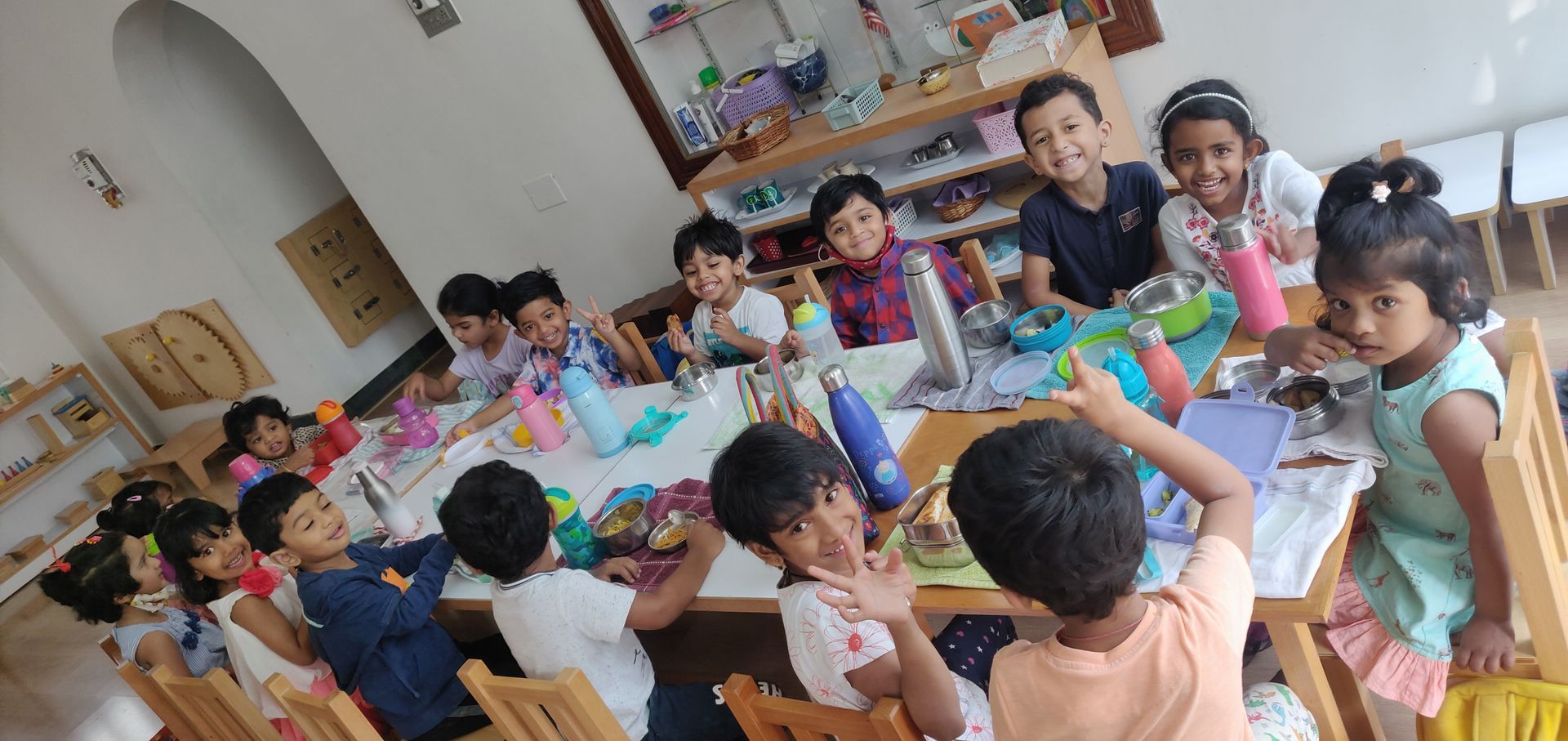
- Learning materials are tactile, sensory-based, and self-correcting.
- Mixed-age classrooms encourage peer learning.
- The environment promotes independence and responsibility.
Montessori education believes that children learn best when they are internally motivated rather than externally pressured.
Understanding a Regular Play School
A regular play school generally focuses on preparing children for formal schooling through structured activities, games, rhymes, worksheets, and group-led learning. While play schools do provide social exposure and basic skill development, they often follow a teacher-directed model where the same activity is conducted for all children simultaneously.
Typical characteristics of regular play schools include:
- Fixed schedules and group activities
- Teacher-centered instruction
- Focus on early academic readiness through worksheets
- Age-segregated classrooms
- Standardized learning pace for all children
Although this approach works for many children, it may not fully support individualized learning needs or independence development.
Why Many Parents Prefer Montessori Education Today
Modern parents increasingly prefer Montessori education because it supports long-term developmental benefits rather than short-term academic preparation. Montessori learning helps children:
- Build strong concentration and focus
- Develop independence and confidence
- Improve decision-making skills
- Cultivate curiosity and love for learning
- Strengthen problem-solving abilities
- Develop social empathy through collaborative environments
These skills are considered essential for success in today’s rapidly changing world.
How Kriya Global Montessori Implements Authentic Montessori Learning?
Schools like Kriya Global Montessori demonstrate how Montessori principles can be implemented effectively in early childhood education.
The school emphasizes a child-centered environment designed to nurture independence, creativity, and curiosity. The learning approach is based on self-directed activities, hands-on materials, and guidance from trained Montessori educators.
Holistic Curriculum
The curriculum includes practical life activities, sensorial learning, language development, mathematics, geography, science, and technology, ensuring balanced intellectual growth.
Nature-Friendly Learning Environment
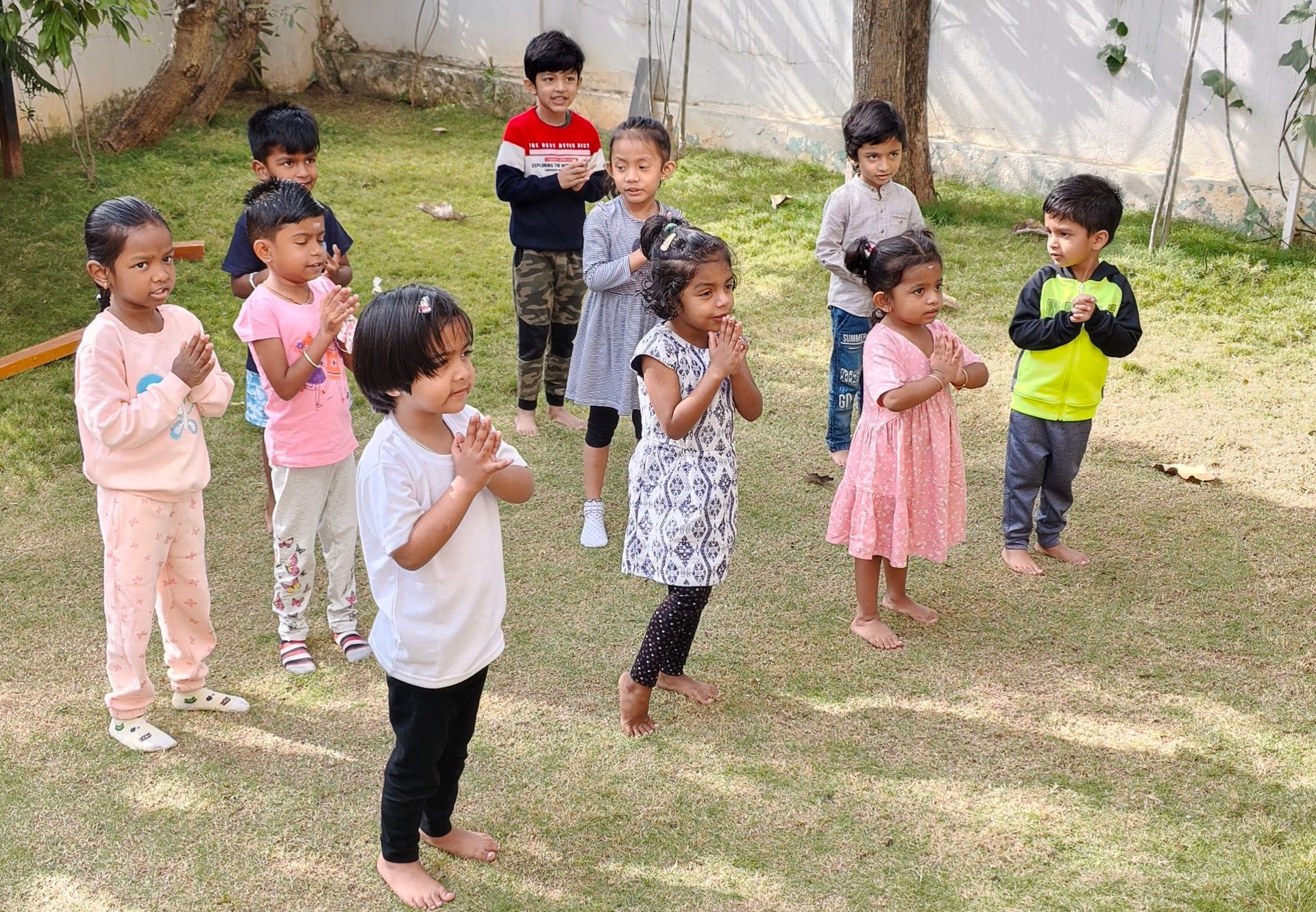
The campus is designed with open green spaces that allow children to explore nature while learning, encouraging physical development and environmental awareness.
Focus on Independence and Confidence
Children are encouraged to choose their own activities, communicate freely, and make decisions, which supports the development of independence and self-confidence.
Enrichment and Experiential Learning
Along with Montessori curriculum activities, children participate in music, dance, art, storytelling, and field visits that enhance creativity and experiential learning.
Trained Montessori Educators
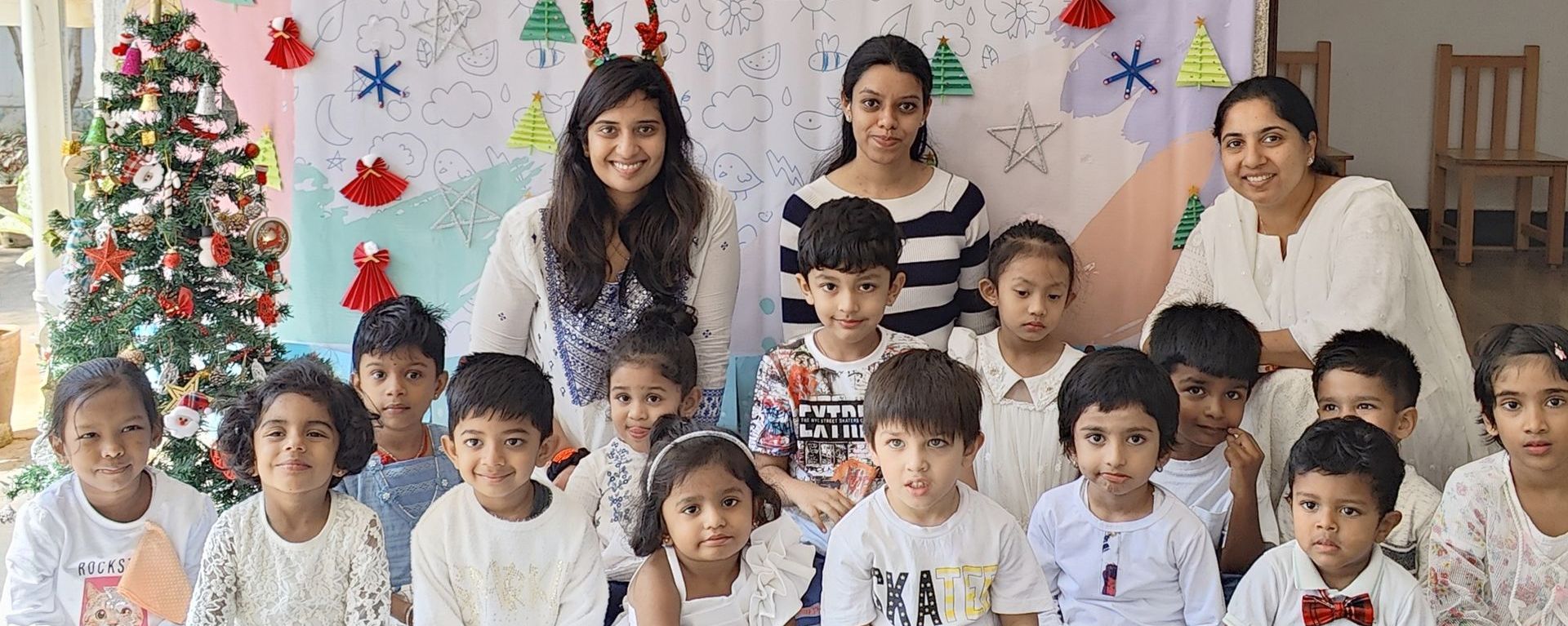
Educators trained in recognized Montessori methodologies guide children through structured observation and individualized instruction, ensuring each child receives attention according to their developmental stage.
Which One Should Parents Choose?
The choice between Montessori and a regular play school depends on several factors:
- Child’s learning style
- Family values toward education
- Long-term developmental goals
- Availability of authentic Montessori programs
- Individual attention needs
Parents who want structured academic readiness programs may find play schools suitable. However, parents who want their child to develop independence, curiosity, and self-motivation often prefer Montessori education.
Long-Term Benefits of Montessori vs Regular Play School
Research and educational observations suggest that children who attend Montessori environments often develop:
- Better executive functioning skills
- Higher intrinsic motivation
- Stronger independence
- Greater problem-solving ability
- Better social adaptability
While regular play schools also provide early social exposure, Montessori environments often foster deeper developmental skills that benefit children through primary education and beyond.
Conclusion
Both Montessori schools and regular play schools play an important role in early childhood education. The key difference lies in the learning philosophy — Montessori focuses on self-directed discovery and independence, while traditional play schools rely more on teacher-guided activities and structured group learning.
Parents who want a learning environment that nurtures curiosity, independence, and lifelong learning skills often find Montessori education to be a strong foundation for their child’s future. By understanding the differences clearly and evaluating the available options carefully, families can choose the educational setting that best supports their child’s unique growth journey.