The Role of 'Sensorial Exercises' in Developing a Child’s Mathematical Mind
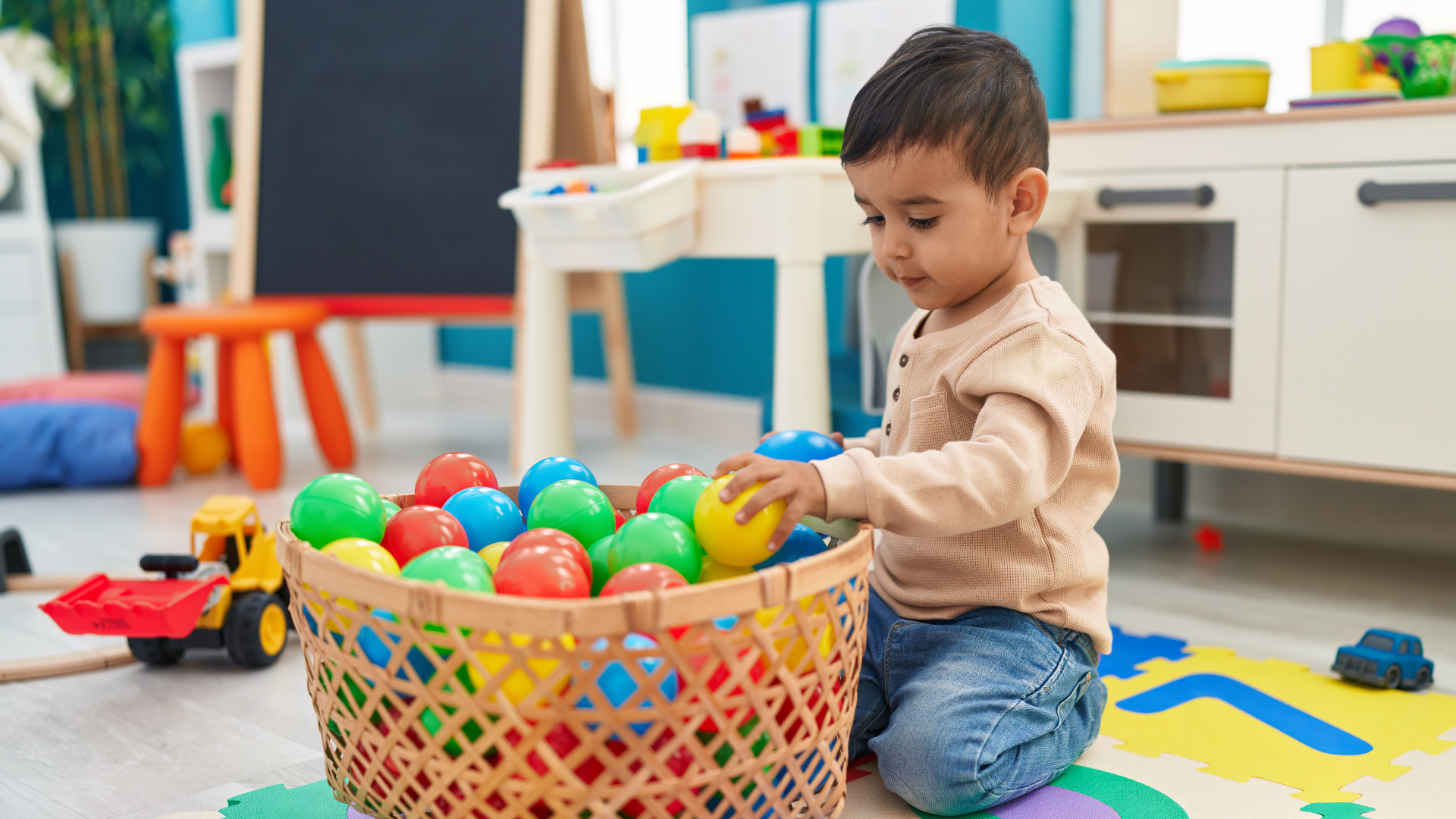
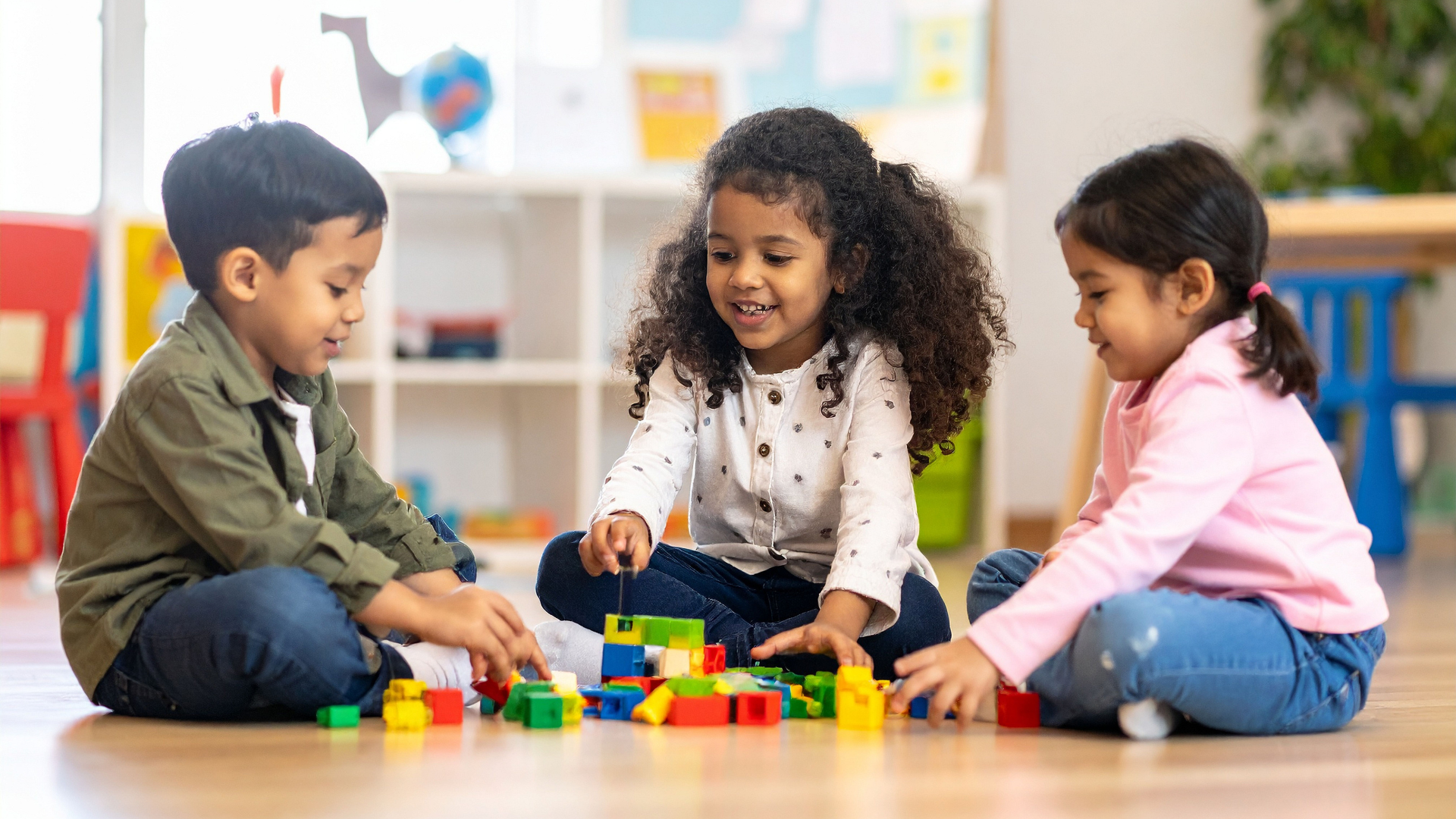
Have you ever watched a young child play? Maybe they are sorting their socks by color, or perhaps they are trying to stack blocks from the biggest to the smallest. To us, it looks like simple fun. But in the world of Montessori, this is the beginning of something very big. It is the start of the "mathematical mind."
When we think of math, we often think of numbers, calculators, and hard equations on a chalkboard. But for a small child, math isn’t about paper and pencils. It’s about the world they can touch, see, and feel. This is why "Sensorial Exercises" are so important. They are the secret bridge that helps a child move from playing with toys to understanding complex math.
In this blog, we will talk about how these simple sensory activities prepare a child's brain for math and why this hands-on approach works so well.
What is the "Mathematical Mind"?
Dr. Maria Montessori believed that every child is born with a "mathematical mind." This doesn't mean every child is a genius at sums. It means that humans naturally like to organize things. We like to put things in order, we like to compare sizes, and we like to see patterns.
Think about a toddler. They want to know which cookie is bigger. They want to know how many steps it takes to get to the door. They are naturally trying to measure and categorize their world. Sensorial exercises give them the tools to do this accurately.
What are Sensorial Exercises?
Sensorial exercises are activities designed to help a child refine their five senses: sight, touch, smell, taste, and hearing. In a Montessori classroom, these exercises use special materials that focus on one specific quality. For example, a set of blocks might all be the same color and shape, but they all have different weights. This helps the child’s brain focus only on weight.
By isolating one quality at a time, the child’s mind becomes very sharp. They start to notice small differences that adults might miss. This ability to see small differences is exactly what a child needs when they start learning math later on.
If you are looking for a Montessori School in Kothanur, you will see these materials beautifully arranged on low shelves, waiting for children to explore them.
How Senses Turn Into Math
You might wonder, "How does touching a wooden block help with addition?" It happens in a few important ways.
1. Learning about Size and Volume
One of the most famous Montessori materials is the Pink Tower. It is a set of ten pink cubes. The smallest is tiny, and the largest is quite big. When a child builds the tower, they are learning about three-dimensional space. They aren't just looking at the cubes; they are feeling the weight. The big cube is heavy; the small one is light.
The Math Connection: There are exactly ten cubes. This prepares the child for the "base-ten" system (how we count from 1 to 10, then 10 to 100). They are literally "holding" the concept of a unit and a thousand in their hands.
2. Learning about Length
The Red Rods are ten wooden rods that are all the same thickness but have different lengths. The shortest is 10 centimeters, and the longest is 100 centimeters (one metre).
The Math Connection: As the child lines them up, they see a pattern. They see that the second rod is like the first rod plus a little bit more. This is the physical version of addition (1 + 1 = 2). Later, when they use "Number Rods" in math class, they already understand what "length" means.
3. Learning about Shapes (Geometry)
Before children learn the names of shapes like "square" or "triangle," they use the Geometric Cabinet. These are wooden drawers full of different shapes. The child takes a shape out and traces the edge with their finger.
The Math Connection: By tracing the shape, the child’s hand "learns" the shape. They feel the sharp corners of a triangle and the smooth curve of a circle. When they have to draw these shapes or calculate their area years later, they have a real, physical memory of them.
Algebra for Four-Year-Olds?
It sounds impossible, but Montessori children often work with "Algebra" toys. One example is the Binomial Cube. It looks like a box of colored blocks. The child’s job is to put the blocks back in the box so they fit perfectly.
To the child, it’s just a puzzle. But the way the blocks fit together is actually a physical map of a complex math formula. They aren't doing the math in their heads yet, but they are seeing the logic of the math with their eyes. When they see that formula in high school, they won't be scared. They will think, "Oh, I remember those blocks!"
Order and Logic
Math is all about order. If you want to solve a problem, you have to follow steps in a certain order. Sensorial exercises teach this perfectly.
When a child works with the Cylinder Blocks (wooden blocks with holes of different sizes), they have to find the right cylinder for the right hole. If they make a mistake, the last cylinder won't fit. This is called a "control of error." The child learns to check their own work, find the mistake, and fix it. This is exactly what a good mathematician does!
For parents who need a safe and educational place for their little ones during the day, a Day Care in Kothanur that uses these methods can make a huge difference. It turns "waiting time" into "learning time" where the child is constantly building their brain power.
How You Can Help at Home (In Simple Ways)
You don’t need expensive wooden blocks to help your child develop a mathematical mind. You can use things you already have! Here are some simple ideas:
- Sorting the Laundry: Ask your child to find all the blue socks or to match pairs. This is "matching," a basic math skill.
- Kitchen Measuring: When you are baking, let your child fill the cups. Ask them, "Which cup is bigger?" or "How many small scoops fill this big bowl?"
- Nature Sorting: While walking in the park, collect leaves or stones. Ask your child to put them in a line from the smallest to the biggest. This is called "grading," and it helps them understand sequences.
- Feely Bag: Put a few different objects (a spoon, a ball, a toy car) in a cloth bag. Have your child put their hand in and guess what the object is just by feeling it. This sharpens their "stereognostic sense" (the ability to recognize things by touch).
The Big Picture: Confidence
The most important thing sensorial exercises give a child is confidence.
Many adults are "scared" of math because it feels like a bunch of confusing rules. But for a Montessori child, math is a friend. They have touched math, moved it around, and built towers with it. They know that math makes sense because they have seen it with their own eyes.
When a child spends their early years refining their senses, they are laying down "tracks" in their brain. These tracks make it easy for math concepts to roll in later. They become thinkers who can look at a problem, break it down into parts, and find a solution.
Final Thoughts
The journey to becoming a mathematician doesn’t start with a textbook. It starts on the floor, with a set of blocks and a curious child. By focusing on the senses, we aren't just teaching a child to see color or feel weight, we are teaching them how to think.
In the right environment, like a dedicated Montessori space, these simple exercises become the building blocks of a bright future. Whether your child is stacking cubes or sorting shapes, remember: they aren't just playing. They are building a mathematical mind, one sense at a time.
If you are near North Bangalore, come see how we use these amazing tools to help children grow. It is a wonderful thing to watch a child discover the logic and beauty of the world through their own hands!