Why is the 'Mixed-Age Classroom' vital for a child's development?
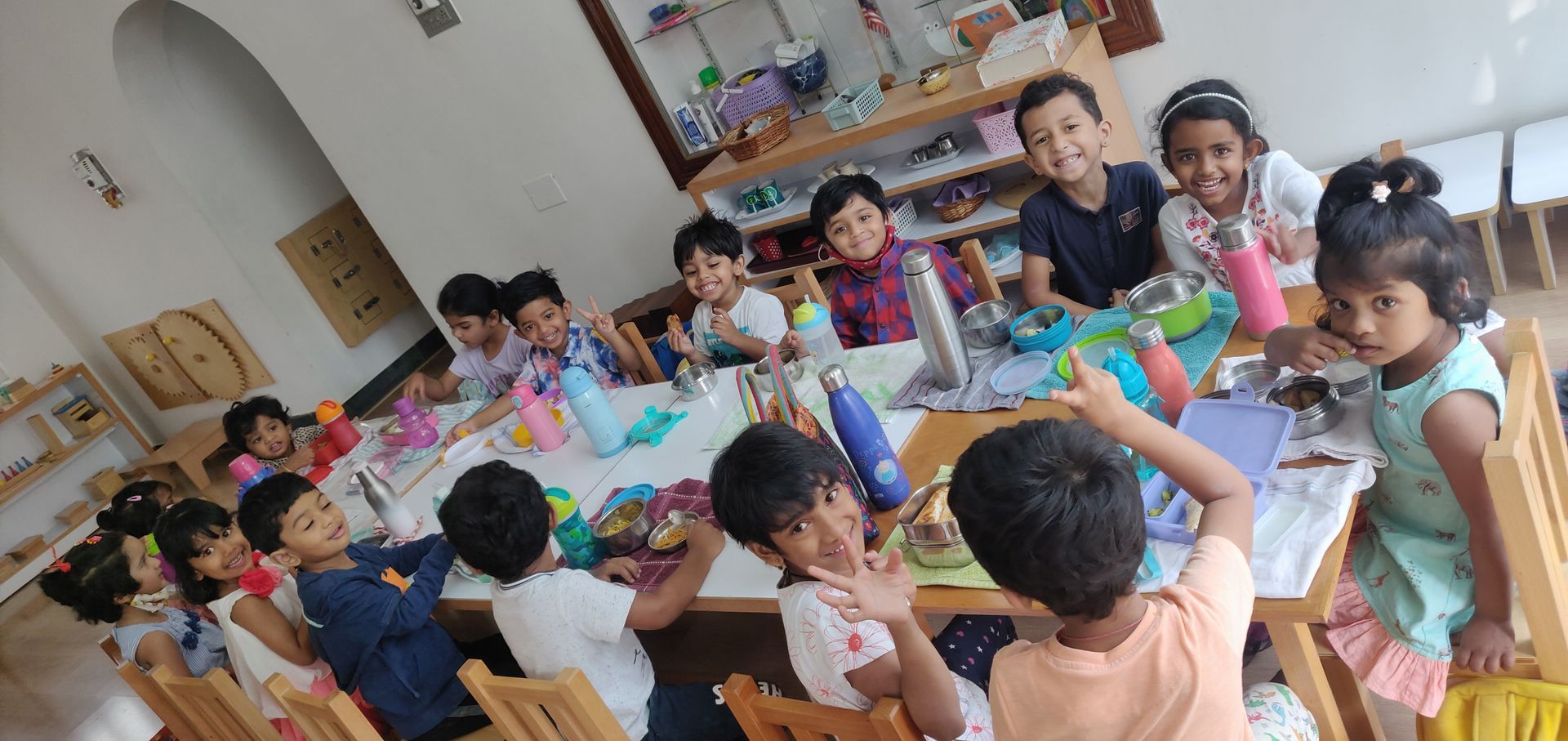
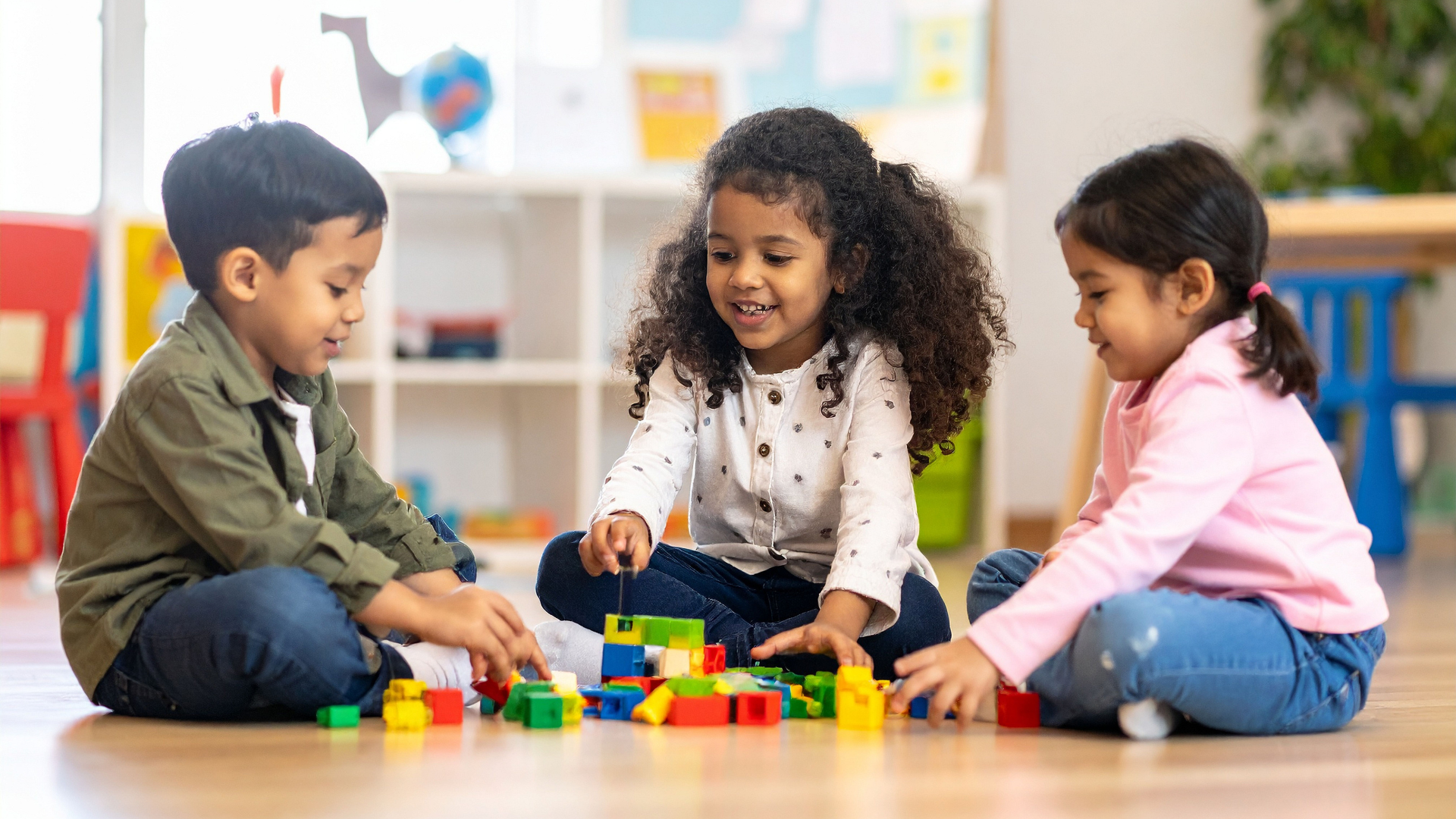
Imagine walking into a room where the air is filled with a gentle hum of activity. In one corner, a five-year-old is carefully showing a three-year-old how to roll up a work mat. In another, a four-year-old is captivated by a complex math puzzle, while an older peer looks over their shoulder, offering a quiet word of encouragement. There is no frantic competition, no "one-size-fits-all" lecture, and no pressure to be at the exact same page as everyone else.
This isn’t just a dream of a perfect playroom; it is the daily reality of a Montessori mixed-age classroom.
For many parents accustomed to the traditional school system—where children are strictly grouped by their birth year—the idea of mixing ages can feel a bit counterintuitive. You might wonder: Will my older child be held back? Will my younger child be overwhelmed?
At Kriya Global Montessori, we see the profound benefits of this model every single day. The mixed-age environment is not just a "feature" of the Montessori method; it is the very engine that drives social, emotional, and cognitive development.
In this blog, we’re going to dive deep into why the mixed-age classroom is vital for a child’s development and why it might just be the greatest gift you can give your little learner.
1. A Natural Way of Living and Learning
Think about the world outside of a school building. When you go to work, are you only allowed to speak to people born in the same year as you? When you attend a family gathering, are the cousins separated into 12-month age increments? Of course not.
Life is inherently mixed-age. We learn from those more experienced than us, and we mentor those who are newer to the journey. By grouping children in three-year cycles (typically 3–6, 6–9, and 9–12 years old), Montessori schools mirror the real world. This setup allows children to interact with a diverse range of personalities and developmental stages, fostering a sense of community that feels like a "mini-society."
2. The Power of Peer Tutoring: "To Teach is to Learn Twice"
One of the most beautiful things to witness at the best montessori school in Kothanur is the "student-to-student" transfer of knowledge.
In a mixed-age classroom, the older children naturally step into leadership roles. When a five-year-old explains a geography lesson to a three-year-old, something magical happens. For the older child, teaching reinforces their own understanding. They have to organize their thoughts, use clear language, and demonstrate patience. This solidifies their knowledge far more effectively than any test ever could.
For the younger child, the benefit is equally great. They are often more motivated to learn from a "big kid" than from an adult. An older peer is a relatable role model, someone who was "just like them" a year or two ago. This creates a cycle of inspiration and aspiration that keeps the classroom vibrant.
3. Social and Emotional Intelligence
In a traditional, single-age classroom, competition can often become toxic. When everyone is expected to do the same thing at the same time, children naturally compare themselves. "Why is he on page 10 while I'm on page 5?"
In a mixed-age setting, this comparison disappears. Because there is such a wide range of activities and levels happening simultaneously, children realize that everyone is on their own unique path. This fosters:
- Empathy: Older children learn to be gentle and helpful toward the younger ones.
- Patience: Younger children learn to wait their turn and respect the complex work of the older students.
- Confidence: Every child eventually moves from being the "novice" to being the "expert" within their three-year cycle, giving them a guaranteed opportunity to experience leadership.
4. Personalized Learning at the Child’s Pace
Every child develops at a different rate. A child might be advanced in literacy but need more time to grasp mathematical concepts. In a traditional classroom, that child might feel bored during English and "behind" during Math.
In a mixed-age Montessori classroom, the curriculum is flexible. A four-year-old who is ready for advanced reading can work with the six-year-olds without being labeled "different." Similarly, a child who needs a bit more time to master a specific skill can continue working on it with younger peers without the stigma of "failing."
At Kriya Global Montessori, our teachers are trained to observe each child’s individual "sensitive periods." Because the Guide stays with the child for three years, they develop a profound understanding of that child’s strengths, challenges, and personality.
5. Stability and Long-Term Relationships
In most schools, children switch teachers every year. Just as the teacher finally learns how to motivate a specific child, the school year ends, and the process starts all over again.
In the mixed-age model, the three-year cycle provides incredible stability. The child spends three years with the same Guide and a consistent core group of peers. This "long-term" relationship builds a deep sense of trust and security. When a child feels safe and known, they are much more willing to take risks in their learning.
For the teacher, this continuity is invaluable. They don't spend the first two months of every year "getting to know" a brand-new class. Instead, they hit the ground running, knowing exactly where each child left off.
6. Encouraging Independence and Self-Regulation
In a room where the teacher isn't the sole source of information, children learn to look to one another and themselves for solutions.
If a younger child forgets how to wash a table, they don't have to wait in a long line for the teacher’s attention. They can simply look over at an older student who is already doing the task. This "passive learning" is incredibly powerful. The younger children are constantly absorbing the higher-level work happening around them, which prepares their minds for when it’s their turn to tackle those lessons.
7. The Three-Year Growth Arc
To truly understand the value of the mixed-age classroom, you have to look at the three-year journey:
- Year 1 (The Observer/Novice): The child enters the environment as the youngest. They spend a lot of time observing the older children, absorbing the culture of the room, and learning the routines. They are nurtured by the older students.
- Year 2 (The Practitioner/Middle): The child has found their footing. They are no longer the "babies" of the group. They are becoming more independent and starting to help those who are newer than them.
- Year 3 (The Leader/Mentor): This is the "capstone" year. The child is now the oldest. They have mastered the materials and take great pride in their leadership role. This year is crucial for developing self-esteem and a sense of responsibility.
Why Kriya Global Montessori?
Choosing the right environment for these formative years is one of the most important decisions a parent can make. At Kriya Global Montessori, we have meticulously designed our classrooms to maximize the benefits of the mixed-age model.
Our campus in Kothanur provides a serene, prepared environment where children are free to explore, discover, and grow. We believe that by honoring the natural development of the child, we aren't just preparing them for school—we are preparing them for life.
Whether it is through our scientifically designed Montessori materials or our dedicated team of certified educators, we ensure that every child feels empowered. If you are looking for a community that values your child as an individual while teaching them the importance of being part of a collective, Kriya is the place to be.
Overcoming Common Concerns
We often hear from parents who worry that their older child might spend "too much time" helping others instead of progressing.
The reality is actually the opposite. Research into the "Protege Effect" shows that teaching others is one of the highest forms of cognitive processing. When an older child explains a concept, they are developing "meta-cognition"—an awareness of how they think and learn. Furthermore, the presence of younger children allows the older ones to develop "soft skills" like emotional intelligence and conflict resolution, which are the most sought-after traits in the modern workforce.
On the flip side, parents of younger children worry about their child being "pushed" too hard. In a Montessori setting, there is no pushing. There is only invitation. A younger child is invited to watch, invited to try, and allowed to move on when they are ready.
Conclusion: A Gift for Life
The mixed-age classroom is a vibrant, living ecosystem. It teaches children that the world is a place of cooperation rather than competition. it teaches them that it’s okay to be a beginner, and it’s rewarding to be a mentor.
By removing the artificial barriers of age-segregation, we allow children to develop naturally, confidently, and joyfully. They learn to respect others, regardless of their "level," and they learn to respect themselves and their own unique timeline.
If you’re ready to see the magic of the mixed-age classroom in action, we invite you to visit us. Discover why so many families trust us and why we are considered a leading choice for holistic education.
Let’s give our children the space to grow together, learn from one another, and become the leaders of tomorrow. After all, the best way to learn about the world is to live in a classroom that reflects the beauty and diversity of the world itself.
Ready to start your Montessori journey?
Visit Kriya Global Montessori today and see how our mixed-age environments can transform your child’s love for learning. We are proud to be a community-focused school, dedicated to excellence in early childhood education. Come see why we are a top-rated choice for parents seeking the best for their children!