How to Handle Toddler Tantrums Using Montessori Principles
If you are a parent of a toddler, you know the feeling. One minute, everything is fine. The next minute, your child is on the floor, screaming because their toast was cut into triangles instead of squares.
It is easy to feel frustrated or embarrassed when this happens. But there is a different way to look at these moments. Instead of seeing a tantrum as "bad behavior," we can see it as a way for a child to say, "I am overwhelmed, and I don't know what to do."
In this guide, we will look at how to handle these big feelings using simple Montessori ideas. We will also talk about how Kriya Global Montessori School helps children learn to manage their emotions in a calm and happy way.
Why Do Toddlers Have Tantrums?
To help a child, we first need to understand why they are crying. Most of the time, a toddler has a tantrum for one of these three reasons:
- They want to do things themselves: Toddlers have a strong drive to be independent. When we do something for them, like putting on their shoes or opening a door,they feel frustrated because they wanted to try it themselves.
- They love routine: Toddlers feel safe when things stay the same. If you suddenly change the plan or move their favorite toy, it can feel like a very big problem to them.
- They don't have the words yet: Imagine being very angry but not being able to say why. That is how a toddler feels. They have "big feelings" but "small words."
Step 1: Stay Calm (You are the Mirror)
The most important rule is that you must stay calm. Children look at their parents to know how to react. If you get angry, your child will get more upset.
Think of yourself as a calm anchor in a storm. Take a deep breath. Tell yourself, "My child is having a hard time. They are not trying to make me mad." When you stay quiet and gentle, it helps your child’s brain start to cool down.
Step 2: Set Up a Helpful Home
A big part of the Montessori way is the "Prepared Environment." This means making your home easy for a child to use. When a child can do things on their own, they have fewer tantrums.
- Low Shelves: Keep toys and books on low shelves so they can reach them without asking for help.
- Easy Snacks: Put some healthy snacks and a small pitcher of water where they can reach them.
- Give Choices: Instead of telling them what to do, give them two choices. "Do you want the blue cup or the green cup?" This makes them feel like they have some power.
If you are looking for a place where your child can learn this kind of independence every day, you might want to look at a kindergarten in kothanur. At Kriya Global, we make sure the environment is perfectly sized for small children to succeed.
Step 3: What to Do During the Tantrum
When the screaming starts, it is too late to talk about logic. Your child’s "thinking brain" has turned off, and their "feeling brain" has taken over.
- Keep them safe: If they are hitting or throwing, gently move them to a safe spot. You can say, "I cannot let you hit. I will keep you safe."
- Use few words: Don't try to explain things. Just say, "I see you are very sad," or "It’s okay to cry. I am here."
- Wait it out: Sometimes, the best thing to do is just sit nearby. Let them know you are there when they are ready for a hug.
- Try a "Peace Corner": Instead of a "Time Out" where the child is sent away as a punishment, create a "Peace Corner." This is a cozy spot with pillows, a few books, or a soft toy. Tell them, "You can go to the Peace Corner to help your body feel better."
Step 4: After the Tantrum (The Lesson)
Once the crying stops and your child is calm, that is the time to teach.
Talk about what happened. "You were sad because we had to leave the park. It is hard to leave when we are having fun." This helps them understand their own feelings. Then, give them a tool for next time. "Next time, you can say 'I'm sad' or ask for 'One more minute.'"
The Importance of the Right School
The way a child is treated at school also affects how they act at home. If a child goes to a school where they are respected and allowed to move and choose their work, they are often much calmer.
Kriya Global Montessori School is known as the best montessori school in Kothanur. Our teachers are trained to talk to children with respect. We don't use rewards or punishments. Instead, we help children learn to solve problems and work together. When a child feels understood at school, they bring that peace home with them.
Simple Phrases to Use at Home
Using the right words can change everything. Here are some simple phrases that follow Montessori ideas:
- Instead of: "Stop crying right now!"
- Say: "I can see this is very hard for you. I’m right here."
- Instead of: "No! Don't touch that!"
- Say: "That is fragile. Let's use two gentle hands, or we can play with this instead."
- Instead of: "Hurry up! We are late!"
- Say: "We need to leave in five minutes. Do you want to put on your left shoe first or your right shoe?"
Teaching "Grace and Courtesy"
In a Montessori classroom, we teach something called "Grace and Courtesy." These are lessons on how to be polite and how to handle social situations. You can do this at home, too!
When your child is happy and calm, play-act different situations.
- "Let’s practice how to ask for a turn."
- "Let’s practice how to say 'no thank you' nicely."
- "Let's practice what to do if we feel angry."
This gives your child a "map" of what to do before they get upset.
Why Kriya Global Montessori is Different?
At Kriya Global Montessori School, we believe that every child wants to be helpful and kind. We don't see tantrums as a sign of a "bad kid." We see them as a sign that the child is learning how to be a person.
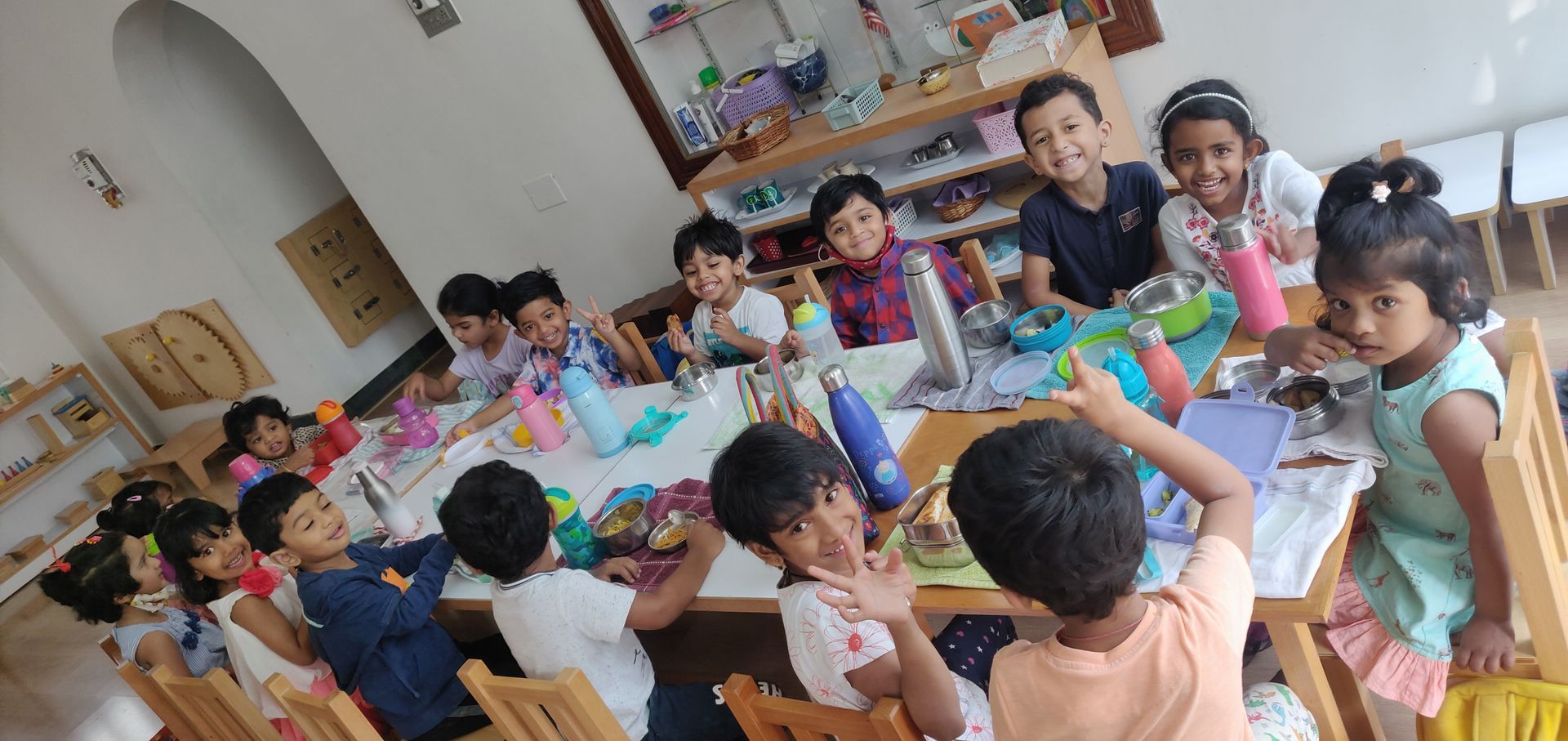
Our classrooms are filled with beautiful materials that help children focus. When a child is busy working on something they love, like pouring water, washing a table, or counting beads—they feel satisfied. A satisfied child is a calm child.
We work closely with parents to make sure the school and the home are working together. This makes life much easier for both the parent and the toddler!
Be Patient with Yourself
Finally, remember that you are learning, too. There will be days when you lose your patience. That is okay. If you get angry, you can say to your child later, "I’m sorry I raised my voice. I was frustrated, but I should have stayed calm. Let’s try again." This teaches your child that even adults make mistakes and can fix them.
Handling tantrums the Montessori way is not about being perfect. It is about being kind, being a good observer, and trusting that your child will grow through this phase.
Conclusion
Toddler tantrums can be very loud and very stressful. But by using these simple steps, staying calm, setting up your home for independence, and showing empathy, you can make these moments much shorter and less scary.
By choosing a school like Kriya Global Montessori, you are giving your child an environment where they are heard and loved. Whether you are looking for a great start in a kindergarten or a school that values respect above all else, we are here to help.
Keep breathing, keep being kind, and remember: you and your child are on the same team!